If you have ever lived in a small studio apartment, you know how quickly searing a steak or frying fish can take over the space. The smell can settle into bedsheets, cling to a living-room rug, and still be noticeable the next morning.
It is natural to look at a portable air purifier as a quick fix. Before buying, it helps to understand what it can handle and what it cannot. A purifier will not replace a range hood or clean grease from cabinets, but a well-matched model can help reduce some airborne cooking particles and odors when you use it with ventilation and routine cleaning.
Quick Answer
Yes, an air purifier can help reduce cooking smells in a small apartment, especially when it combines particle filtration with an activated carbon filter. The particle filter can capture airborne cooking particles, while activated carbon is designed to adsorb some odor-causing gases.
Not all purifiers are equally useful for cooking odors. If odor support is a main reason for buying, check the exact replacement-filter version rather than relying on a general “odor control” claim. Look for clear information about the carbon filter, replacement availability, room-size fit, and the current filter instructions.
For model comparisons, see our guide to air purifiers with HEPA and activated carbon filters. It separates compact bedroom options from larger apartment choices and notes where filter configurations vary by model.
As the U.S. Environmental Protection Agency (EPA) notes in its Consumer Guide to Air Cleaners, portable air purifiers are a supplement to—not a replacement for—source control (cleaning up grease) and ventilation (running a range hood or opening windows).
Why Cooking Smells Linger in Small Apartments
Small apartments suffer from two major layout issues:
- Shared Air Volume: In an open studio or small one-bedroom, your kitchen, living room, and sleeping quarters share the same air. Without physical doors, odors diffuse rapidly.
- Soft Fabric Traps: Some odor-causing gases can linger in the air, while nearby fabrics and surfaces can retain cooking residue and smell. Sofas, curtains, carpets, and pillows may need cleaning even after the air itself feels fresher.
Here is a practical breakdown of what happens when you cook and how to combat it:
| Cooking Type | What’s in the Air | Primary Strategy | Purifier Role |
|---|---|---|---|
| Searing & Frying (e.g., steak, bacon) | Heavy smoke particles, grease mist, strong gaseous odors | High-speed range hood / exhaust fan | Run purifier on High near the kitchen boundary to intercept smoke. |
| Boiling & Steaming (e.g., pasta, soups) | High humidity, water vapor, light odors | Ventilation (open a window or run bath exhaust) | Run on Low. Avoid putting it directly in humid steam to protect the carbon. |
| Pungent Spices (e.g., curries, garlic) | Pure gaseous VOCs, highly persistent odor | Active cross-ventilation + carbon filter | Let the carbon filter run continuously on Medium; clean surfaces immediately. |
| Burned Food (e.g., toast, scorched pan) | Visible smoke particles and strong odor | Turn off the cooking source safely and ventilate | Use a higher fan setting to help clear airborne particles after the source is handled. |
What HEPA and Activated Carbon Each Do
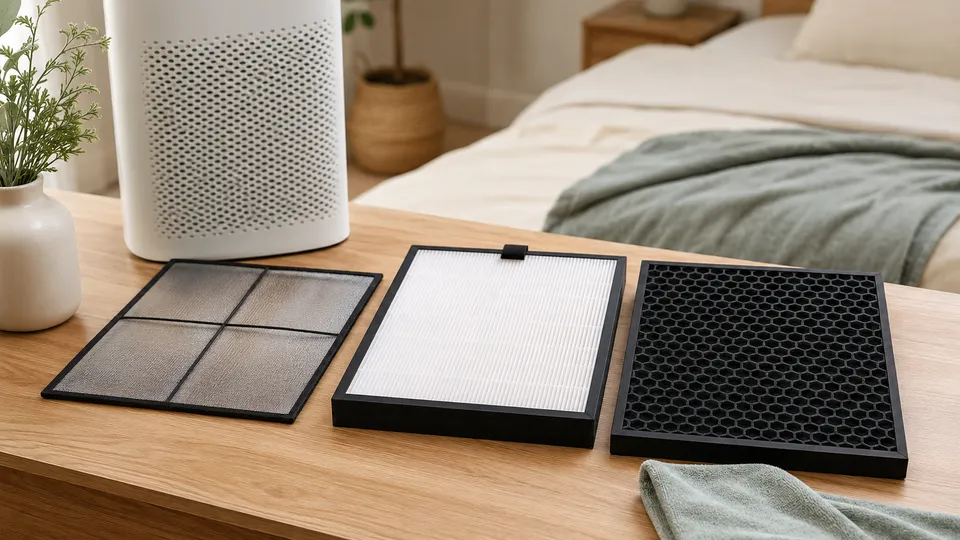
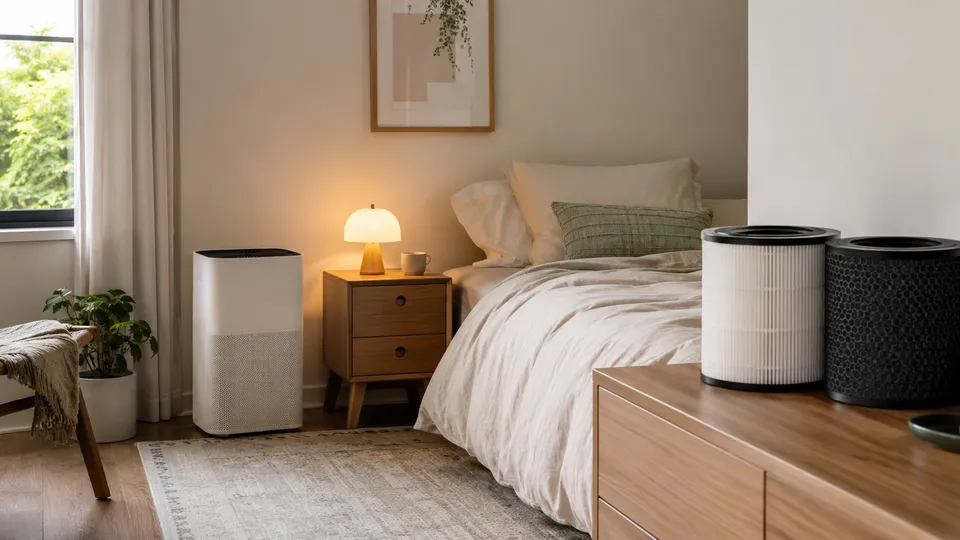
To successfully clean cooking air, your purifier needs two distinct systems working in tandem.
HEPA: The Smoke & Particle Shield
HEPA (High-Efficiency Particulate Air) filters are designed to capture solid and liquid particles like dust, pet dander, and cooking smoke. When oil splatters and smokes, HEPA cleans it up.
Keep the purifier away from direct heat, steam, and grease splatter. A nearby open area is more practical than crowding it beside the stove, and it makes routine filter maintenance easier.
Activated Carbon: The Odor & Gas Sponge
Odor molecules are gases, and gases pass straight through a HEPA filter. This is where activated carbon comes in. It uses a chemical process called adsorption to trap gas molecules in its porous structure.
- Carbon capacity varies: A thin carbon-coated sheet may have less odor capacity than a more substantial carbon component, especially with frequent or strong cooking smells. Do not assume a filter uses pellets, a specific carbon weight, or a particular odor capacity unless the manufacturer documents it for that exact replacement filter.
For a deeper dive into filter differences, check out our guide: HEPA Filter vs. Carbon Filter: What Do You Need in a Bedroom Air Purifier?.
What an Air Purifier Cannot Do
It is easy to expect too much from a new appliance. An air purifier will not:
- Remove grease stuck to surfaces: It cannot wipe down your greasy backsplash, cabinets, or stove walls.
- Wash your fabrics: If your bedroom curtains already smell like fried onions, you need to wash them; no air purifier can pull odors out of settled fabric.
- Diagnose every odor: A stale or unpleasant smell from the machine can come from a saturated filter, moisture, trapped dust, or residue elsewhere in the room. Check the maker’s maintenance instructions before assuming that one filter is the cause.
Before relying on a purifier, practice source control: empty your kitchen trash daily, clean the grease trap on your range hood, and wipe down counters after cooking.
How to Use a Purifier for Cooking Smells
Place It in a Nearby Open Zone
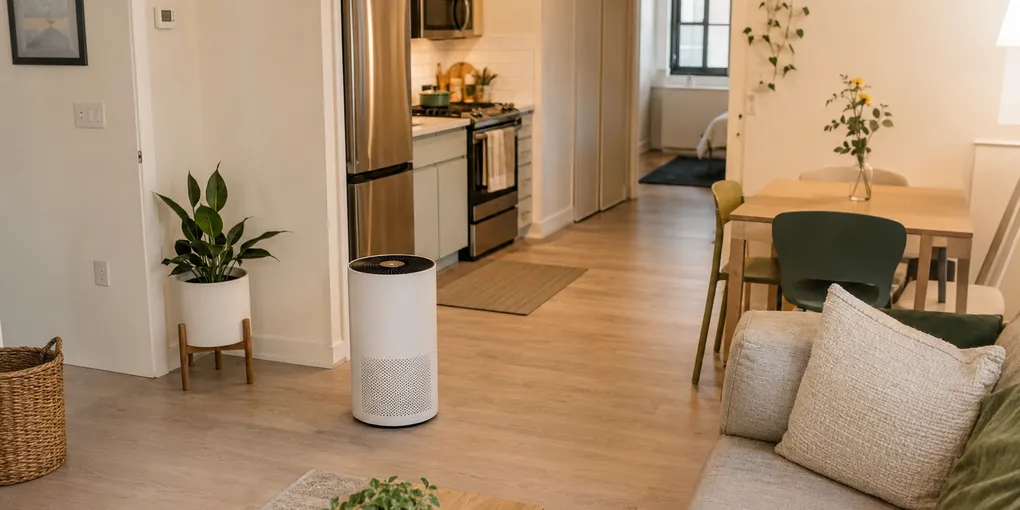
Instead of crowding the purifier next to the stove or hiding it in a bedroom corner, place it in an open nearby area between the kitchen and the living or sleeping space. Keep the intake and outlet clear, and follow the maker’s placement guidance for the exact model.
Run it Early (Proactive vs. Reactive)
Don’t wait until your apartment smells like a diner to turn on the machine.
- Turn it on when you begin cooking.
- Keep it running afterward while the room clears.
- Use the highest setting you can tolerate for the situation, then return to a quieter setting when the space is comfortable.
What to Look For When Buying
If your primary concern is kitchen odors, keep these specs in mind:
- True Carbon Volume: Avoid “carbon-coated” filters if you cook heavy meals. Look for products that list the weight of their carbon filter or show visible carbon pellets.
- Room-Sized CADR (Clean Air Delivery Rate): Ensure the unit’s CADR matches the combined square footage of your open kitchen and living area, not just the kitchen itself.
- Filter Replacement Cost: Check the price and maker-recommended schedule for replacement filters before buying. Cooking frequency, odor intensity, and the exact filter design can all change how quickly odor performance fades.
For a broader room-size comparison, see best air purifiers for apartments, studios, and small spaces.
A Simple Small-Apartment Routine
A simple, repeatable routine does more for a small apartment than the most expensive air purifier run incorrectly:
- Exhaust First: Turn on your range hood or bathroom exhaust fan before heating the pan.
- Position the Purifier: Put it in a nearby open zone, away from direct heat and splatter, with clear airflow around the unit.
- Match the Fan Speed: Use a stronger setting while the air is actively affected, then lower it when the room is comfortable again.
- Ventilate: Open a window or use exhaust ventilation when outdoor air conditions make that appropriate.
- Wash & Wipe: Wipe counters and stove surfaces immediately, and wash kitchen linens regularly.
- Maintain Filters: Follow the exact model’s cleaning and replacement instructions, especially when odor performance drops or the unit develops an unfamiliar smell.
FAQ
Why does my air purifier smell sour or sweet after I cook?
It may mean the carbon filter is saturated, but it can also point to moisture, trapped dust, or residue in or around the machine. Check the maker’s cleaning and replacement instructions for your exact model. If the filter or unit remains unpleasant after the recommended maintenance, replace the relevant filter rather than assuming the smell has one universal cause.
Can I wash an activated carbon filter to reuse it?
Usually not, unless the manufacturer explicitly says that a specific carbon filter is washable. Many carbon filters should be replaced rather than rinsed. Some models are exceptions: the Winix 5500-2, for example, uses a washable AOC carbon filter with its own cleaning and drying instructions. Never wet a carbon filter unless the manual for that exact filter permits it.
Will a purifier prevent grease from building up on my kitchen cabinets?
No. An air purifier only filters air that passes through its fan, while surface grease still needs routine cleaning and kitchen ventilation. It may reduce some airborne particles, but it will not replace wiping the cooking area or using a range hood when one is available.
Should I run the purifier in my bedroom with the door open or closed?
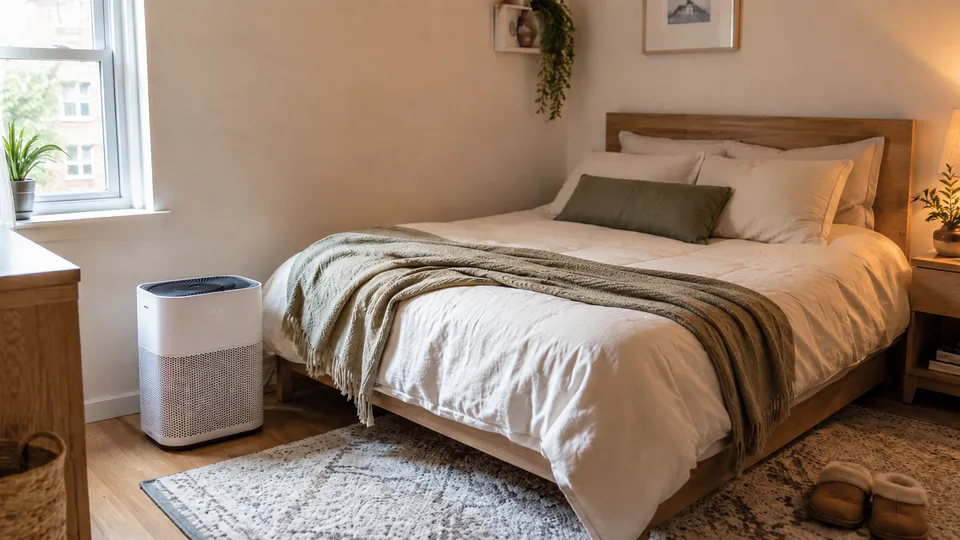
If you are cooking, run the purifier in the living area with your bedroom door closed to keep smells out. Once cooking is finished and the kitchen has been ventilated, you can move the purifier to the bedroom (or run a second unit) with the door closed to freshen your sleeping space.
Is a HEPA-only purifier useless for kitchen smells?
It can still help with visible smoke and fine cooking particles, but it is less useful for lingering odor on its own. For odor support, look for activated carbon or another filter designed for gases in addition to particle filtration.
Bottom Line
An air purifier is a valuable ally in a small apartment, but it isn’t magic. It works as an odor-interceptor and particle-cleaner, acting as a critical middle layer between your range hood (which vents grease) and your sponge-like sofa fabrics (which trap smells).
To get the most out of your purchase, choose a model with enough particle airflow for the space and a clearly described carbon filter, place it in an open nearby zone, and run it as part of a regular cooking and cleaning routine.