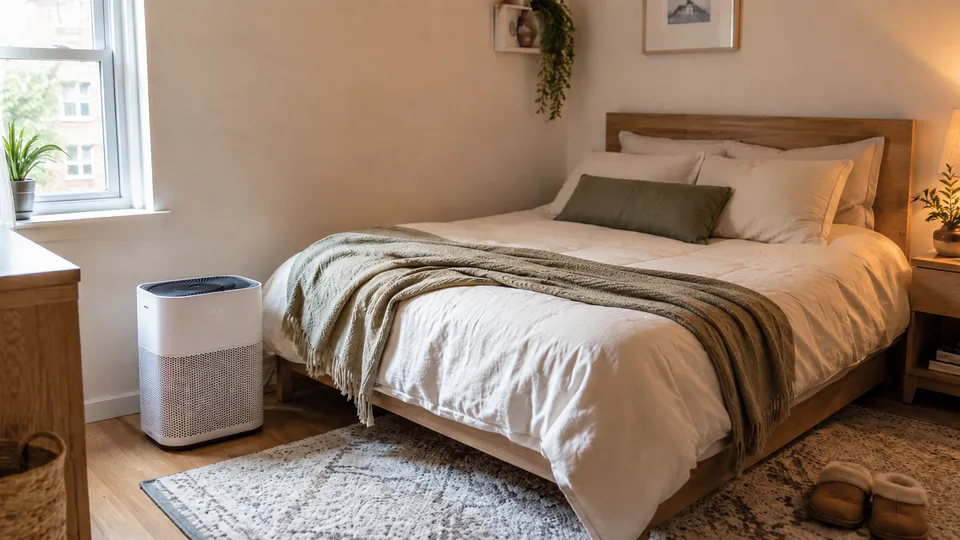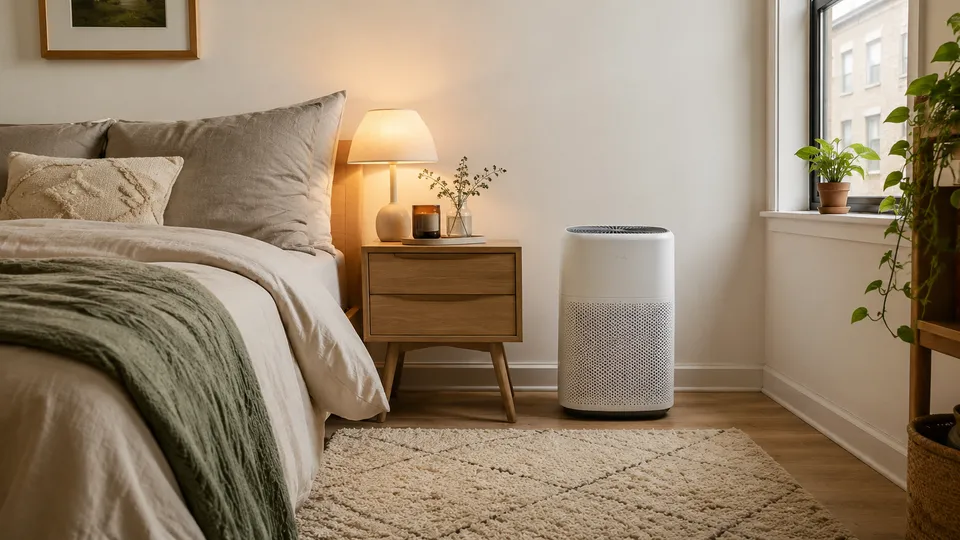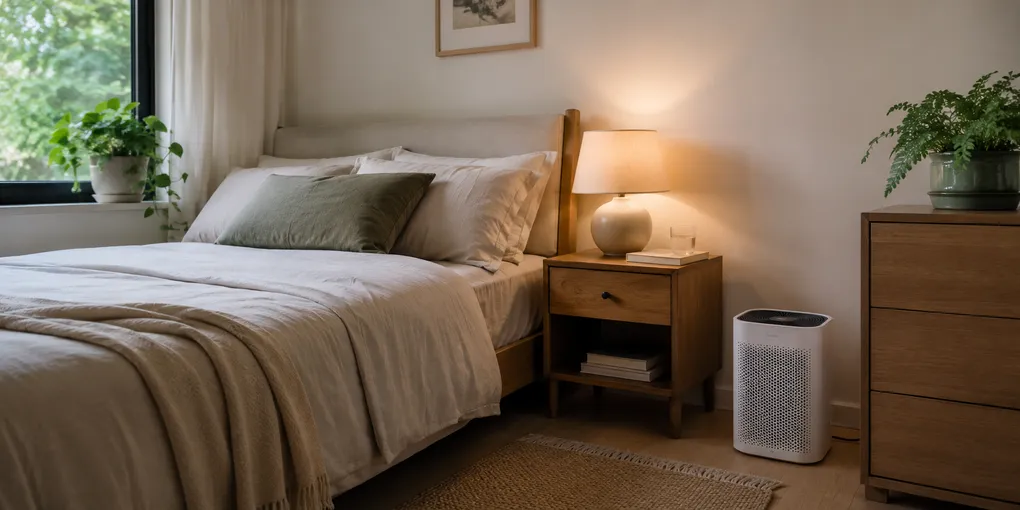
A bedroom air purifier has a different job than one you might use in a living room, kitchen, or basement. It has to work in a smaller space, run quietly near your bed, and avoid becoming one more annoying object in a room that should feel calm.
That is why bedroom shopping is not just about picking the strongest air purifier you can afford. A good choice should match your room size, fit your layout, have filters you can keep up with, and stay comfortable enough to use every day.
This guide explains how to choose a bedroom air purifier in a practical way, especially if you rent, live in an apartment, share walls with neighbors, or have a small bedroom where space is limited.
Quick Answer
To choose an air purifier for a bedroom, start with the room size. Measure the length and width of your bedroom, multiply them to get square footage, then look for a smoke CADR that is at least about two-thirds of that number.
After that, check the basics that matter most in a bedroom: filter type, noise level, display lights, replacement filter cost, and placement. For most everyday users, a sensible bedroom air purifier is a portable plug-in unit with a mechanical particle filter, enough CADR for the room, a quiet low or medium fan setting, dimmable lights, and replacement filters that are easy to find.
Be cautious with vague room coverage claims, ozone-generating devices, and dramatic language like sanitizes the room or medical grade. Those phrases are less useful than clear sizing, safe operation, and regular maintenance.
Measure the Bedroom First
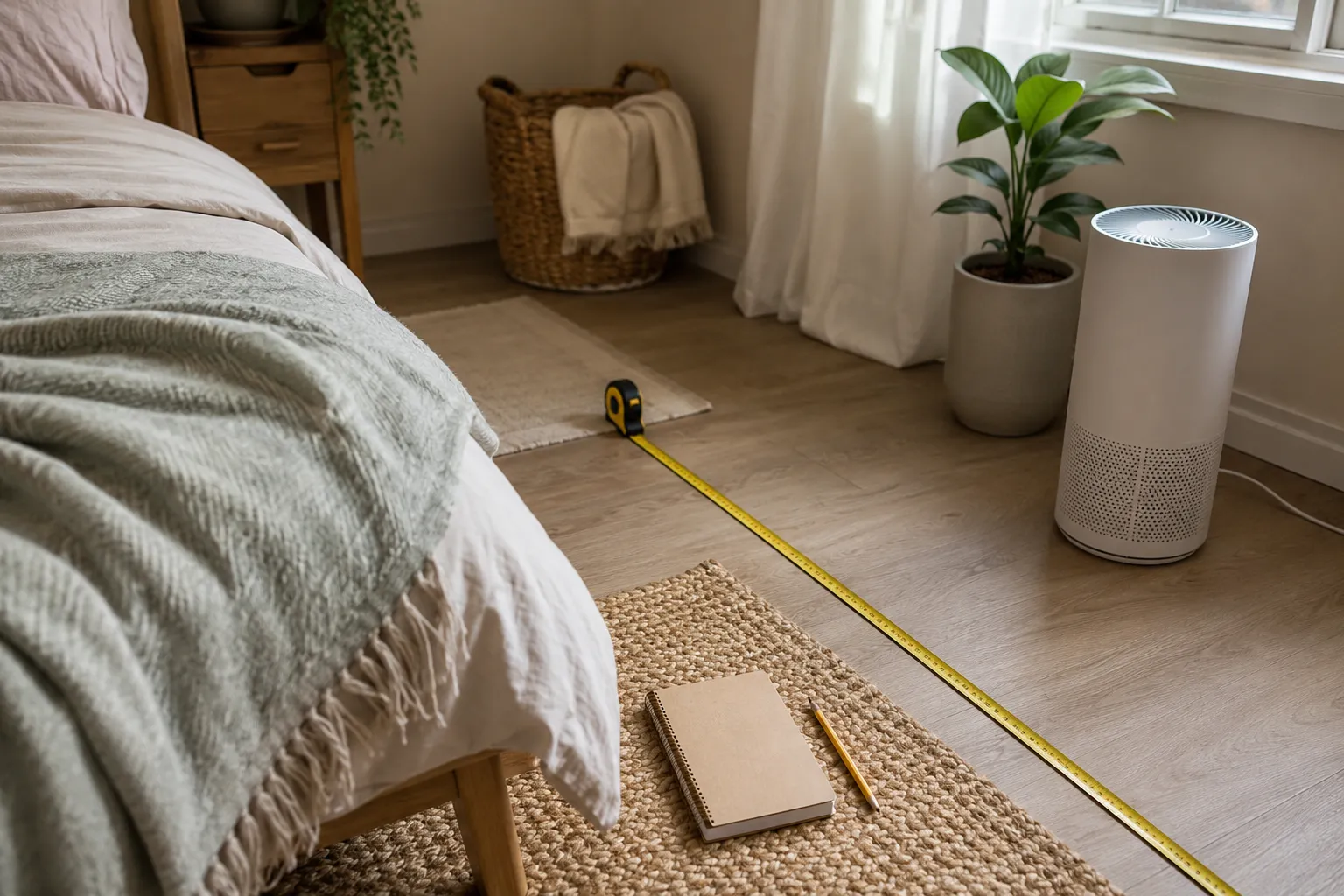
Before comparing features, measure the room where the purifier will actually run. Portable air purifiers are usually meant for one room or area, not an entire apartment.
Use this simple formula:
Length × width = square footage
For example, a 10-by-12-foot bedroom is 120 square feet. A 12-by-14-foot bedroom is 168 square feet.
This step matters because an undersized purifier may need to run on a higher fan speed more often. That can make it louder and less pleasant in a room where you sleep, read, or unwind. On the other hand, the biggest unit is not always the best choice either. A large purifier may take up too much floor space, use more energy, or feel visually heavy in a small room.
Ceiling height also matters. Many room-size estimates assume a standard 8-foot ceiling. If your bedroom has high ceilings, a lofted layout, or an open connection to another area, square footage alone may underestimate the amount of air in the space.
If you live in a studio apartment, think carefully about the area you want the purifier to serve. A tiny bedside unit may be fine for personal airflow, but it may not be sized for an open sleeping-and-living area.
Use CADR to Find the Right Size
CADR stands for Clean Air Delivery Rate. In plain English, it tells you how quickly an air purifier delivers filtered air. A higher CADR generally means the purifier can handle a larger room or move filtered air through a space more quickly.
Many air purifiers list separate CADR numbers for smoke, dust, and pollen. For bedroom sizing, smoke CADR is a useful number to check because it reflects smaller particle filtration.
A practical rule is to choose a smoke CADR that is at least about two-thirds of your bedroom’s square footage.
Here are a few examples:
- 100-square-foot bedroom: about 65 CADR or higher
- 120-square-foot bedroom: about 80 CADR or higher
- 150-square-foot bedroom: about 100 CADR or higher
- 200-square-foot bedroom: about 130 CADR or higher
You may want more capacity if you have pets, heavy dust, frequent outdoor smoke, high pollen exposure, high ceilings, or a room that opens into a larger space.
Be careful with broad claims like covers up to 800 square feet. Those numbers can depend on fan speed, test assumptions, room conditions, and how often the air is expected to pass through the unit. CADR is usually more helpful than a large coverage number printed on the box.
Choose a Filter Setup That Matches Your Room
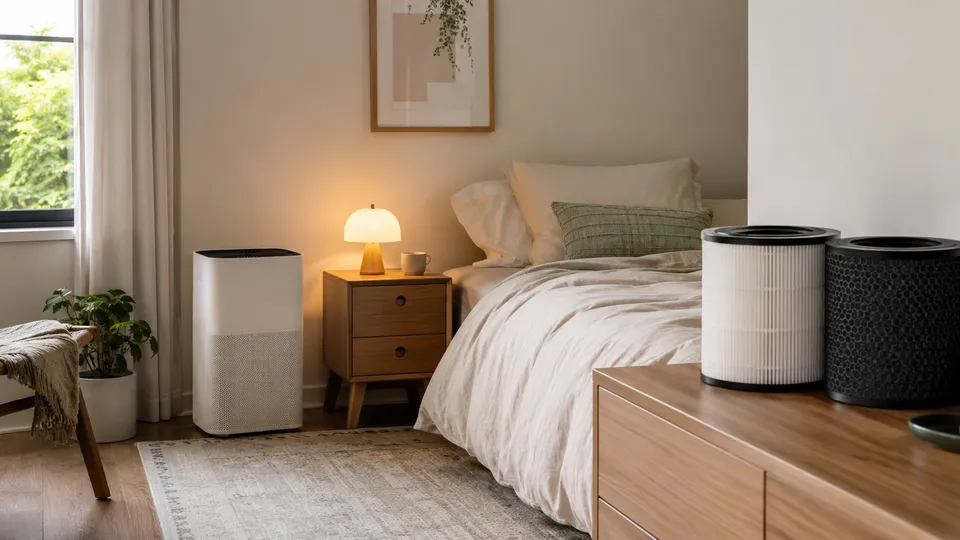
For most bedroom users, the main thing to look for is a mechanical particle filter. Many brands describe this as a HEPA filter, true HEPA filter, or HEPA-style filter. These filters are designed to capture airborne particles such as dust, pollen, smoke particles, and pet-related particles.
A pre-filter is useful too, especially if you have pets, carpet, heavy bedding, or visible dust. It catches larger material like hair and lint before it reaches the main filter. In a bedroom, that can matter because sheets, rugs, laundry piles, and pet beds all add to the dust load.
Activated carbon is worth considering if odor is part of the problem. It may help with some smells, but it has limits. A small carbon layer will not fix a litter box that needs cleaning, cooking smells that keep drifting in from the kitchen, or odors coming from a hallway or neighboring unit. If the source remains, the smell may return.
For a product comparison focused on a particle filter plus a separate odor-filter stage, see air purifiers with HEPA and activated carbon filters.
Be Careful With Ozone and “Sanitizing” Claims
For a bedroom, avoid ozone-generating air cleaners. Ozone may be marketed with phrases like activated oxygen or fresh air technology, but it is not a feature most everyday home users should seek out for an occupied bedroom.
Also be cautious with dramatic language such as medical grade, hospital grade, kills everything, or sanitizes the room. These phrases can sound reassuring, but they do not replace the basics: correct room size, CADR, filter type, safe operation, and regular maintenance.
If a purifier includes an ionizer or similar electronic feature, look closely at the safety information. A simple fan-and-filter design is often easier for beginners to understand and evaluate.
Make Sure It Will Be Comfortable at Night
A bedroom air purifier can have good specs and still be annoying if it sounds sharp, rattles at low speed, or lights up the room like a charging station.
Check the noise level on low and medium settings, not just the highest setting. High speed may be useful for short periods, but most people do not want that sound next to the bed all night.
Sleep mode can help, but do not rely on the label alone. On some models, sleep mode mainly lowers the fan speed and dims the display. That may be comfortable, but it may also reduce how much air moves through the filter.
Display lights are easy to overlook. A glowing ring or bright air-quality indicator may seem minor during the day, then feel distracting at midnight. For a bedroom, look for dimmable lights or a true display-off setting.
Plan the Placement Before You Buy
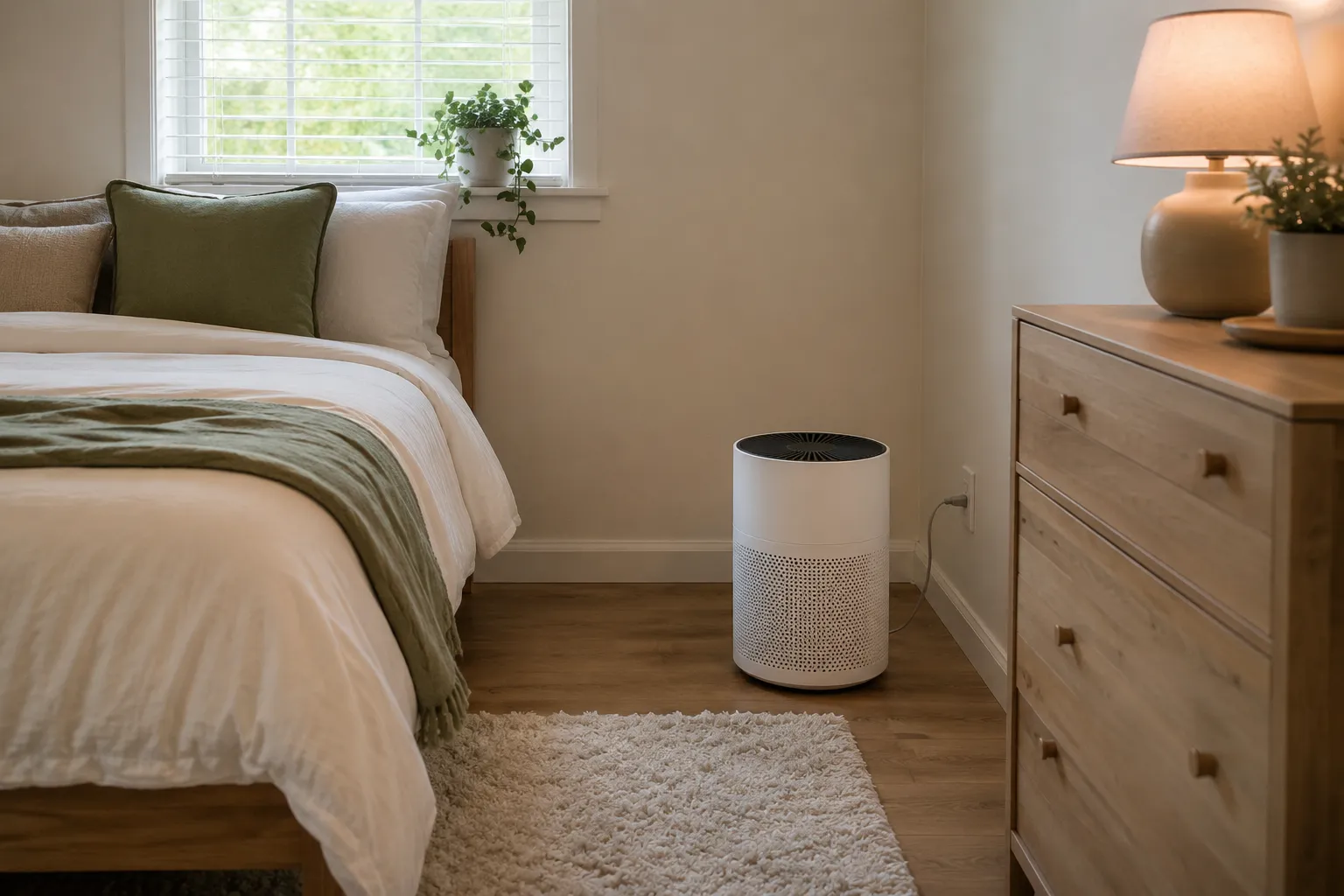
Do not wait until the purifier arrives to figure out where it goes. In a small bedroom, placement can be the difference between a useful appliance and something you keep moving out of the way.
A bedroom purifier needs open airflow. Avoid placing it behind a dresser, under a desk, inside a closet, tight against curtains, or directly under loose bedding. Keep both the intake and outlet clear.
Good bedroom locations may include:
- Near the bed, but not blowing directly at your face
- Near a window that brings in outdoor particles
- Near a pet sleeping area
- In an open corner with enough clearance
- Beside a dresser or nightstand if airflow is not blocked
For renters, outlet access matters. If the only available outlet forces a cord across a walkway, the purifier may not work well in that spot. A good location should be practical, safe, and easy to live with.
Think About Filter Cost and Maintenance
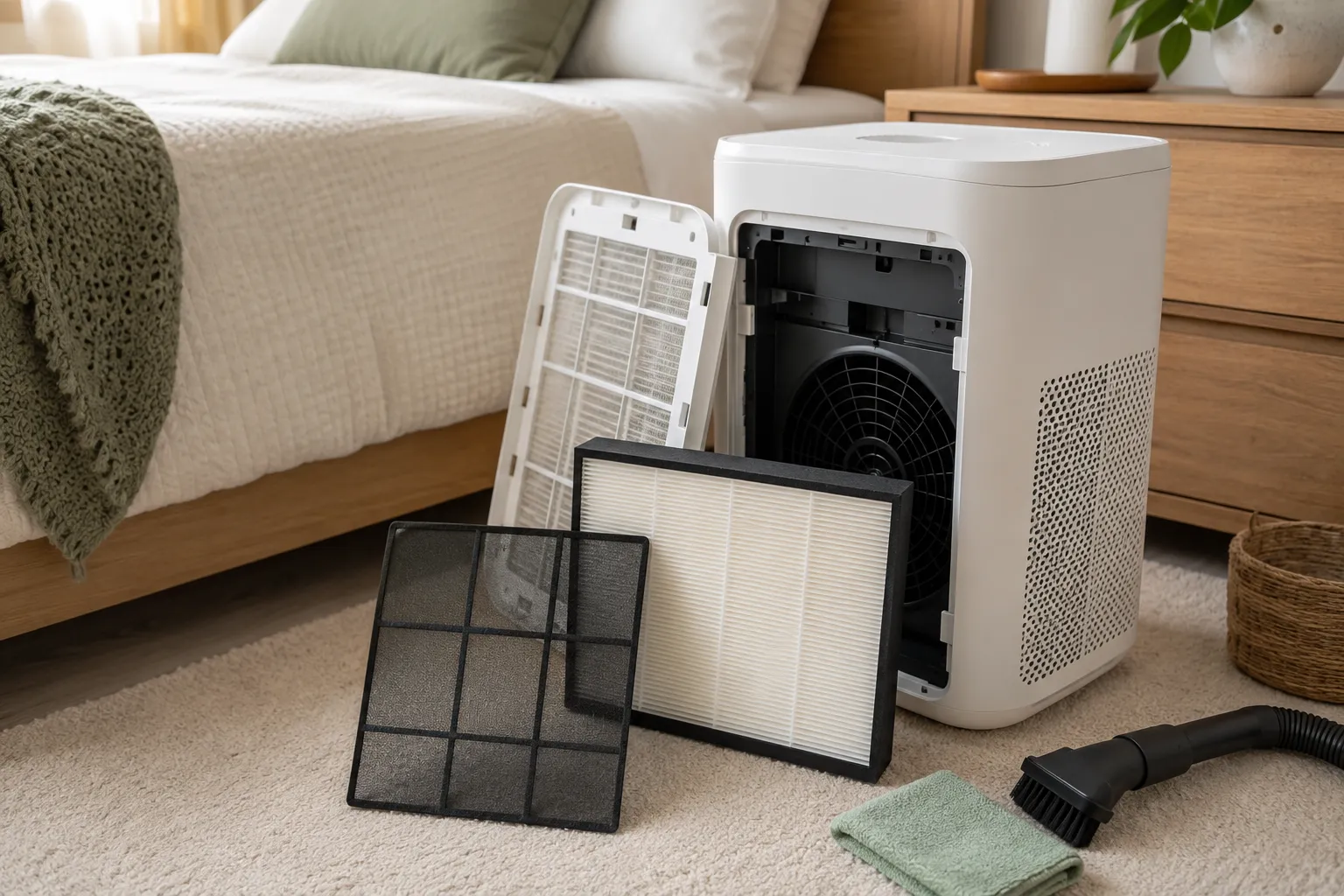
An air purifier is not a one-time purchase. The filters need attention, and replacement costs can add up over time.
Before buying, check how often the manufacturer recommends changing the filter. The schedule can vary based on how dusty the room is, whether you have pets, how often the purifier runs, and whether the room is exposed to smoke or heavy outdoor particles.
Also check whether replacement filters are easy to find. Some inexpensive purifiers use filters that are harder to replace later. A lower upfront price may not feel like a good deal if the filters are expensive, frequently out of stock, or only available from one source.
If the unit has a washable or vacuumable pre-filter, that can be helpful in a bedroom with pets or carpet. Just make sure it is easy to access. A filter compartment that is annoying to open may discourage regular maintenance.
Consider Energy Use
Bedroom air purifiers often run for long stretches, especially overnight. Energy use is not the first thing most people think about, but it matters for a device that may be on every day.
Look for energy information when comparing similar models. ENERGY STAR certification can be a helpful signal if you want a more efficient unit.
The smallest purifier is not always the best energy choice if it has to work too hard. A properly sized purifier running at a comfortable speed may be more practical than a tiny unit running on high all the time.
Bedroom-Specific Buying Tips
For Small Bedrooms
Prioritize a compact footprint, quiet operation, and lights that turn off. Do not assume a desktop purifier is enough unless the CADR fits the room. A small room still needs enough air movement.
For Apartments and Rentals
Choose a portable plug-in unit that does not require installation, wall mounting, ductwork, or landlord approval. If you share walls, low noise is especially important.
Be realistic about odors from hallways, neighbors, or shared ventilation. A bedroom purifier may help inside the room, but it cannot fully control air coming from outside the room.
For Pet Owners
Look for a pre-filter and easy access for cleaning. Pet hair, lint, and bedding fibers can collect quickly. Keep vacuuming, washing bedding, and cleaning pet areas; the purifier should support those routines, not replace them.
For Outdoor Smoke or Heavy Pollen Seasons
Pay closer attention to smoke CADR and filter replacement timing. You may also need to keep windows closed when outdoor air is poor. The purifier can be part of a cleaner bedroom setup, but its performance depends on room size, filter condition, airflow, and how consistently it is used.
For Odor Concerns
Look for an activated carbon element, but keep in mind that carbon saturates over time. If you deal with persistent ambient odors, such as living above a restaurant or near a shared trash area, you may need to replace the carbon filter more frequently than the standard particle filter.
For cooking-related odor specifically, read our guide to using an air purifier for cooking smells in a small apartment.
Common Mistakes to Avoid
The biggest mistake is buying by room coverage alone. Always check CADR and match it to your actual bedroom size.
Another mistake is choosing a purifier that is too small because the bedroom is small. If the unit cannot move enough air, it may be noisy, slow, or frustrating.
Do not forget filter costs. If you will not want to buy the replacement filters later, the purifier is not a practical choice.
Finally, do not expect one air purifier to fix every air problem. Cleaning, reducing dust sources, managing moisture, and ventilating when outdoor air is suitable still matter.
FAQ
What size air purifier do I need for a bedroom?
Measure the room and look for a smoke CADR that is at least about two-thirds of the square footage. For a 120-square-foot bedroom, that means about 80 CADR or higher.
Is a small air purifier enough for a small bedroom?
Sometimes, but only if the CADR matches the room. A very small desktop purifier may help near your immediate area, but it may not be sized for the whole bedroom.
Should I keep the bedroom door closed?
A closed door can help the purifier focus on one room. If the door stays open to a hallway, studio space, or larger room, the purifier may need more capacity.
Where should I put an air purifier in a bedroom?
Place it where air can move freely. Keep it away from curtains, bedding, furniture, and walls that block airflow. Near the bed is fine if the airflow is comfortable.
Can I run a bedroom air purifier overnight?
Yes. Many modern portable air purifiers are designed for extended use. Keep the intake grills clear of blankets or curtains, place the unit securely, and choose a low or sleep setting if fan noise bothers you.
Do I need a HEPA filter?
A mechanical particle filter is the main feature to look for. HEPA and HEPA-style filters are common, but CADR, noise, placement, and maintenance matter too.
Do air purifiers remove odors?
Some models with activated carbon may help with certain odors. They work best when you also reduce the odor source.
Is one air purifier enough for an apartment?
Usually not for the whole apartment. Portable air purifiers are typically sized for one room or area. If your main concern is the bedroom, choose for the bedroom first.
Final Thoughts
The best bedroom air purifier is not the loudest, largest, or most feature-packed option. It is the one that fits your actual room, runs comfortably during your routine, and has filters you can keep up with.
Start with the basics: measure the room, check CADR, choose a sensible filter setup, confirm nighttime comfort, and plan where the unit will sit. That approach keeps the decision practical and helps your bedroom feel calmer without turning a simple home upgrade into a complicated project.