Possibly, but a portable washing machine is not automatically apartment-safe just because it has wheels or connects temporarily. It still needs written permission when your lease requires it, a workable water source, a secure drain route, the right electrical setup, a level floor, and somewhere for damp clothes to finish drying.
The useful question is not “Can portable washers work in apartments?” Some can. The useful question is whether this machine, this faucet, this drain route, and this lease work together in your apartment.
This guide is a purchase-before-you-buy checklist. It does not provide legal advice, override a lease, approve a plumbing setup, or suggest hiding an appliance from a landlord.
Quick Answer: Check These Six Things First
| Check | A workable answer looks like | Stop and investigate when |
|---|---|---|
| Lease and building rules | Your lease, landlord, or building manager permits the appliance setup. | The rules prohibit washers, restrict water-using appliances, or are unclear. |
| Water source | The exact washer manual supports your faucet and supplied connection method. | You have a pull-down, pull-out, filtered, unusual, or non-removable faucet and have not confirmed compatibility. |
| Drainage | The hose reaches an approved sink, tub, or drain point securely and without strain. | The hose kinks, stretches, can slip free, or has no approved place to drain. |
| Electrical setup | A suitable wall outlet is close enough for the exact machine and its manual. | Your plan depends on a power strip, an improvised extension setup, or an overloaded outlet. |
| Floor and clearance | The machine can sit level with room for its lid, hoses, and wet-laundry workflow. | It blocks a walkway, sits on an unstable surface, or has nowhere safe to move during a cycle. |
| Drying plan | You have room and permission for a drying rack or the exact requirements of a separate dryer. | You assume the spin cycle is a heated drying cycle or have not planned ventilation and moisture. |
If one answer is uncertain, resolve it before ordering. A low-priced washer becomes expensive quickly if it cannot connect safely or is not allowed in the unit.
1. Start With the Lease, Not the Product Listing
Portable does not mean exempt from apartment rules. Buildings may restrict in-unit washers because a loose hose, overflow, vibration, or drainage problem can affect neighboring units and shared plumbing.
Read the lease and building rules for language about washers, dryers, water-filled appliances, plumbing connections, alterations, leaks, or tenant liability. If the wording is unclear, ask the landlord or manager in writing. A retailer listing cannot tell you whether your building permits the setup.
Do not treat a temporary faucet connection as a reason to skip this step. The connection may be removable, but the water and drainage risk still exists while the machine is running.
2. Know Which Portable-Washer Workflow You Are Buying
“Portable washing machine” describes several very different routines.
| Type | Water routine | Drain and spin routine | What it changes in an apartment |
|---|---|---|---|
| Small automatic washer | Usually connects temporarily to a compatible sink faucet. | It handles its programmed wash and spin cycle, then drains through a hose. | You need to confirm the faucet, drain route, outlet, and floor space every time you use it. |
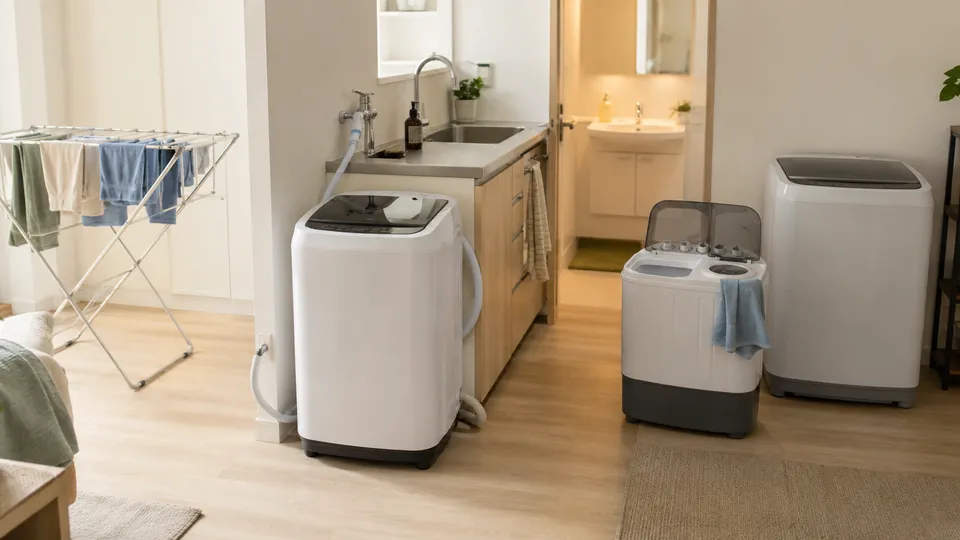
| Manual-fill twin-tub washer | You fill the wash tub yourself. | You manage draining and move wet clothes into a separate spinner. | It may avoid a faucet connection, but it adds manual water handling and wet-laundry transfer. |
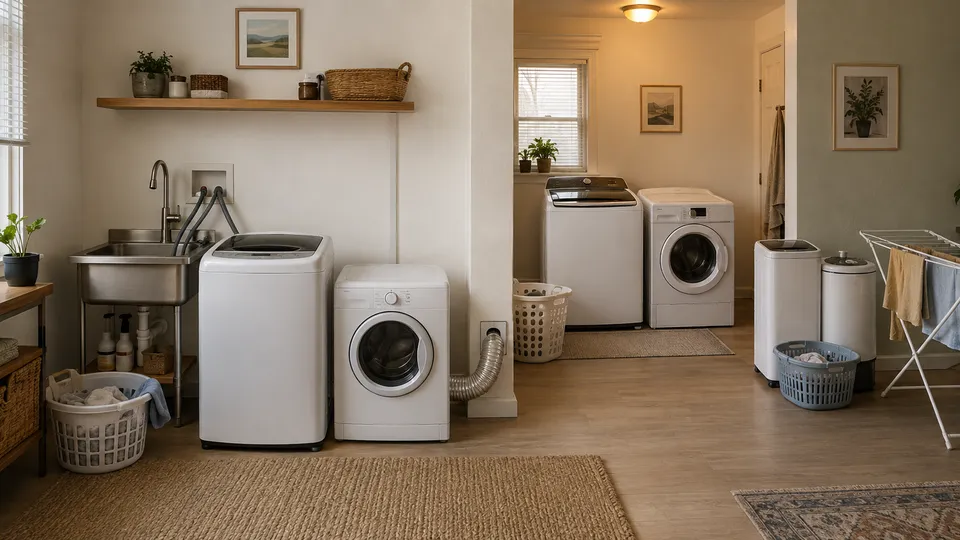
| Larger portable automatic washer | Uses the same basic temporary water-and-drain concept as a small automatic machine. | Handles more laundry but has a larger body and heavier storage burden. | More capacity does not remove the need for a real floor location, hose route, and outlet plan. |
For example, BLACK+DECKER lists a quick-connect sink adapter and drain hose with its small BPWM09W portable washer, but also lists it as cold-water-only. In contrast, ROVSUN describes its 11 lb. twin-tub washer as a manual fill, wash, drain, and transfer-to-spinner process.
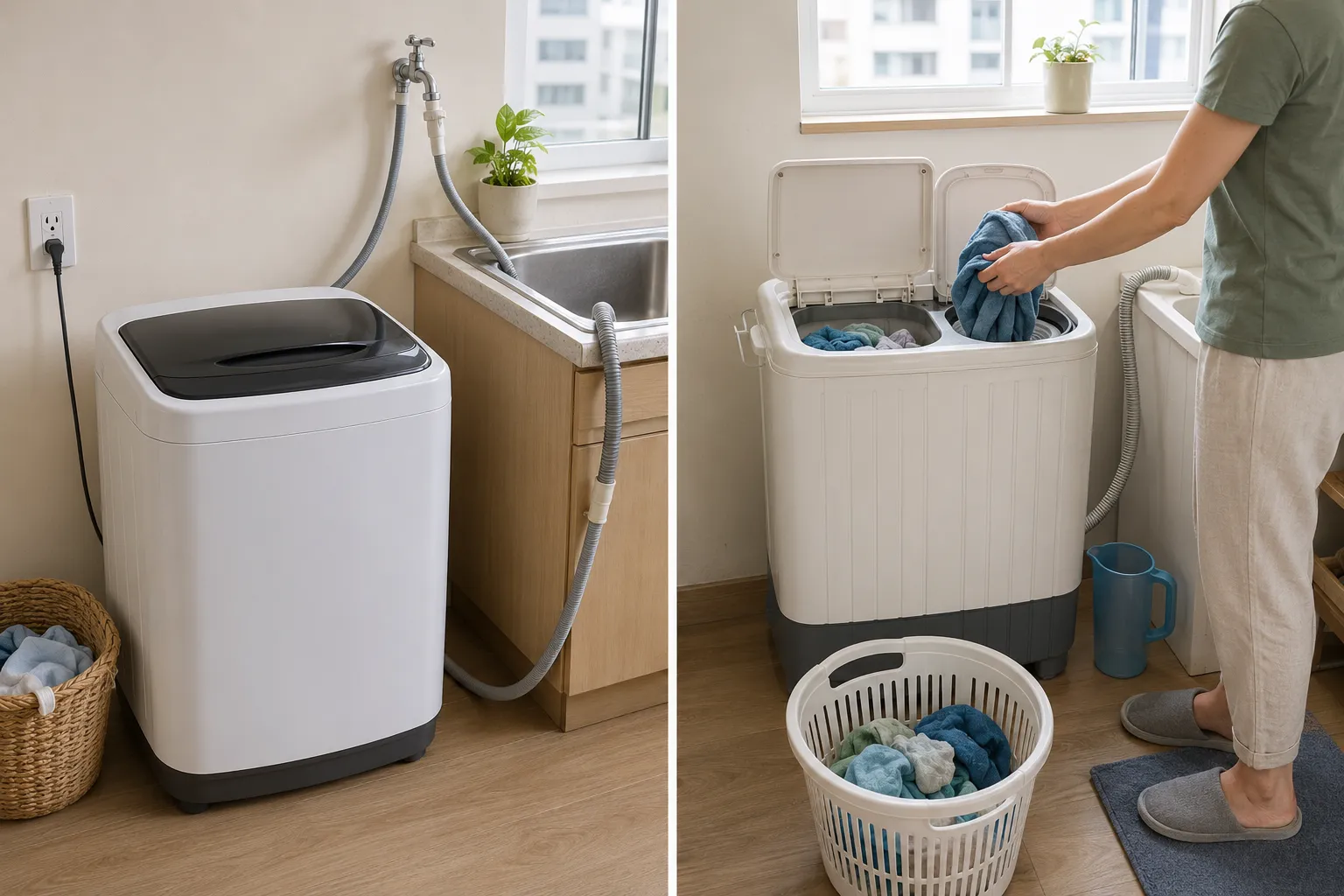
Those are examples of why the word “portable” is not enough. Read the manual for the exact model rather than assuming any portable washer connects, drains, spins, or stores the same way.
3. Confirm Faucet Compatibility Before Buying an Adapter
An included quick-connect adapter is not a promise that the machine will attach to every apartment faucet. The washer’s instructions and your faucet construction both matter.
Before buying, identify:
- Whether the faucet has a removable aerator and whether the washer instructions call for that connection.
- Whether the faucet is fixed or has a pull-down or pull-out spray head.
- Whether a filter, unusual thread, specialty finish, or integrated component changes the connection.
- Whether the washer’s supplied adapter is specified for your faucet, rather than relying on a generic listing that says “universal.”
The search results for washer adapters are heavily product-focused, but an adapter is only one part of the decision. A part that fits the thread does not prove that the faucet, hose routing, lease, or drain plan is appropriate.
If your faucet is not clearly compatible in the machine’s documentation, do not order the washer on the assumption that an inexpensive adapter will solve the problem. Choose a manual-fill workflow or confirm the setup with the manufacturer and landlord first.
For a more detailed fixed-faucet, pull-down, and pull-out decision process, read will a portable washing machine fit your faucet.
4. Plan the Drain Route as Carefully as the Water Connection
Every washer needs somewhere for used water to go. Depending on the model, that may be a sink, tub, or another destination explicitly supported by the manual. The drain hose should reach without being stretched, sharply bent, pinched under a door, or left where it can pull loose.
There are two important differences to verify in the exact manual:
- Gravity drain vs. pump drain: The required hose position can differ by machine. Do not copy the height or routing advice from a different model.
- Automatic washer vs. twin tub: An automatic model may run its drain stage as part of a cycle. A twin-tub design asks you to manage the drain and then transfer clothes to the spinner.
Secure drainage matters more than convenience. A hose held casually near a sink edge can shift while the machine vibrates or while someone uses the sink. Build the routine around a drain point that remains available for the full cycle.
5. Treat the Outlet, Extension Cord, and Floor as One Safety Check
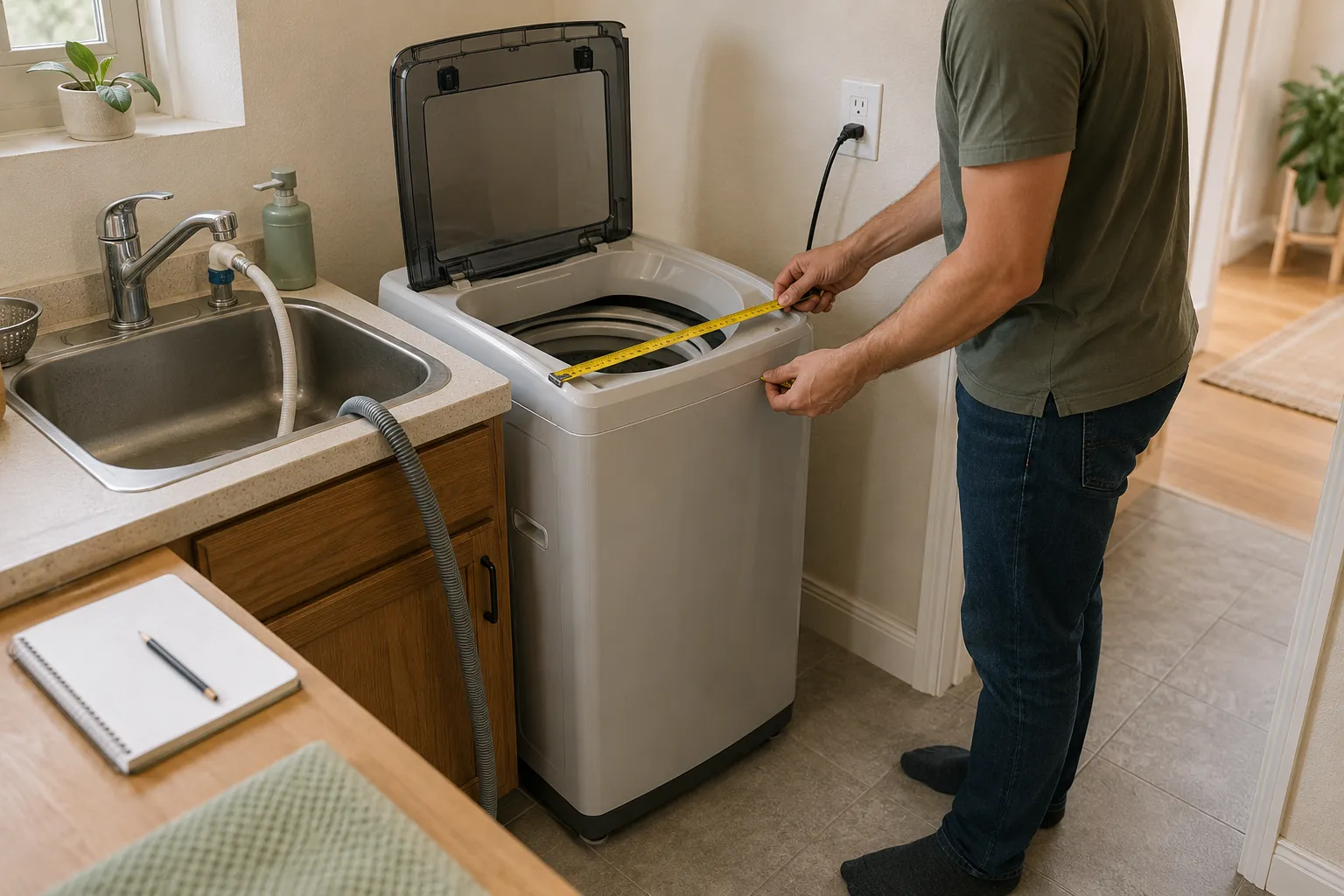
Use the exact electrical rating and grounding instructions in the model’s manual. A nearby wall outlet is part of the setup, not an afterthought to solve after the washer arrives.
Do not make a power strip or improvised extension-cord arrangement the foundation of a water-using appliance setup. Some manuals specify narrow conditions for an extension cord while others do not; the correct rule is the one in your exact manual. If the cord cannot reach a suitable outlet without improvising, reconsider the location or the machine.
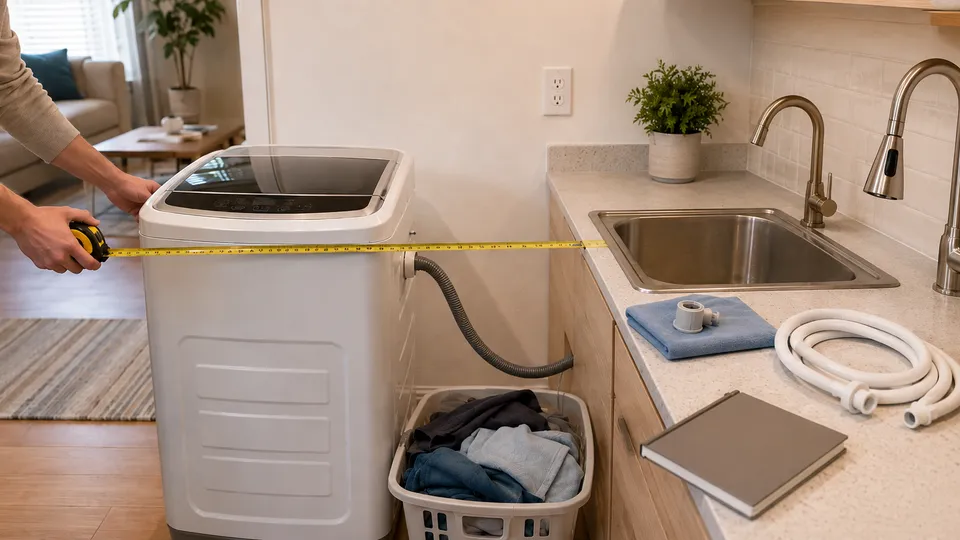
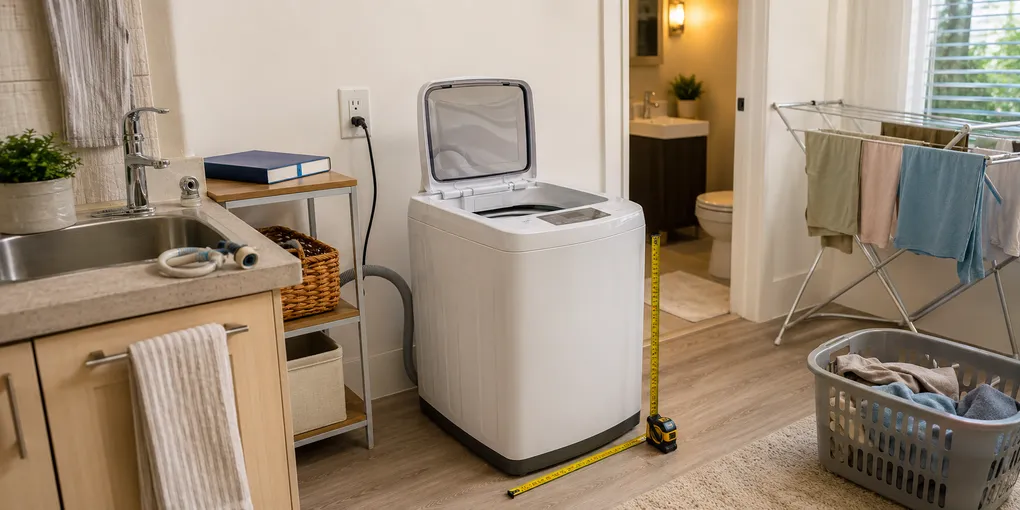
The floor matters too. A washer needs a level, stable place with room to open the lid, load laundry, connect hoses, and handle damp clothes after the cycle. A compact machine can still vibrate or shift when a load is unbalanced. Measure the machine body, open-lid height, hose path, and the walking space around it before purchase.
For a broader first-apartment checklist around outlets, storage, and real routines, read what to look for before buying small appliances for a first apartment.
6. A Spin Cycle Is Not a Complete Drying Plan
A spinner removes some water from clothing. It does not replace a heated dryer or guarantee that laundry will dry quickly in a small apartment.
The simplest plan is often a drying rack with enough airflow and a place where damp clothes will not block daily life. It takes time and floor space, but it avoids an exhaust route.
If you are considering a separate dryer, evaluate it as a second appliance with its own restrictions. For example, BLACK+DECKER lists its BCED26 compact dryer as a 1,400 W, 120 V vented dryer that includes an exhaust connector. A standard outlet does not eliminate the need to follow the exhaust, clearance, lint-care, and rental requirements for that specific dryer.
When you are ready to compare a compact heated dryer with a no-heat alternative, use our portable dryer for apartments guide. To choose the complete routine rather than the dryer alone, compare portable washer and dryer setups for apartments.
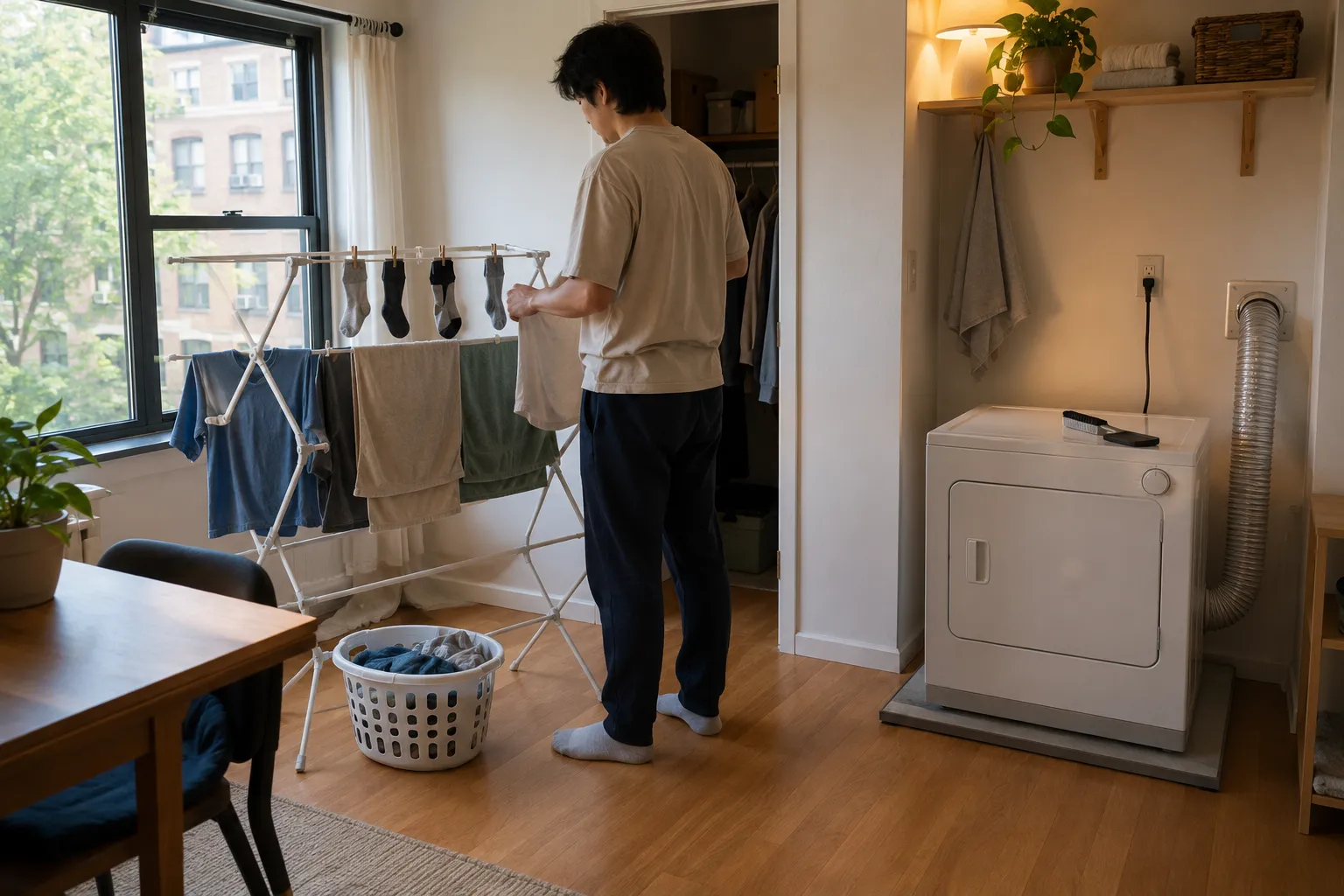
Do not buy the washer first and leave drying for later. A workable apartment laundry setup accounts for the entire cycle: dirty clothes, water, washing, spinning, damp clothes, and drying.
Should You Buy One?
Consider a portable washer when all six checks are clear: you have permission, a documented water connection or a realistic manual-fill process, secure drainage, a suitable outlet, a stable location, and a complete drying plan.
Do not buy one yet when the lease is unclear, the faucet is unconfirmed, the hose would be improvised, the outlet plan depends on an extension arrangement, or you have nowhere for damp laundry. Solving those constraints first is more useful than choosing a machine based on capacity or price.
Once the setup checks are complete, compare the distinct automatic, twin-tub, high-capacity, and dryer-pairing options in our guide to the best portable washing machines for apartments.
FAQ
Can I use a portable washing machine in an apartment without hookups?
Possibly. Some compact automatic washers use a temporary faucet connection and drain hose, while manual-fill twin-tub models use a different workflow. Neither option overrides the lease, confirms your faucet, or removes the need for secure drainage and a suitable outlet.
Are portable washing machines allowed in apartments?
There is no universal answer. Permission depends on your lease, building rules, landlord, and local conditions. Ask before ordering rather than assuming that a removable connection is allowed.
Will a portable washer connect to a pull-down faucet?
Do not assume so. Pull-down and pull-out faucets can differ from fixed faucets in ways that affect temporary connections. Confirm compatibility in the washer documentation and with the faucet manufacturer before purchasing.
Can I drain a portable washing machine into a sink or bathtub?
Only use a drain destination and hose position that the specific machine’s manual supports. The hose must remain secure for the whole cycle and must not kink, stretch, or pull free as the machine moves.
Can I use an extension cord with a portable washing machine?
Follow the exact model manual. Do not assume that an extension cord, power strip, or adapter is acceptable merely because it is convenient. If the washer cannot reach a suitable outlet as instructed, the planned location may not be workable.
Does a twin-tub spinner dry clothes completely?
No. A spinner removes water but is not a heated dryer. Plan for air drying or evaluate a separate dryer and its ventilation, electrical, lint-care, space, and rental requirements.
Final Take
You can use a portable washing machine in some apartments, but only after the apartment itself passes the test. Permission, water, drainage, electricity, floor stability, and drying are all part of the product decision.
When those conditions are clear, a portable washer can be a practical way to handle small loads. When one is uncertain, pause before buying. The right answer is not always a different model; sometimes it is waiting until the setup is genuinely safe and allowed.