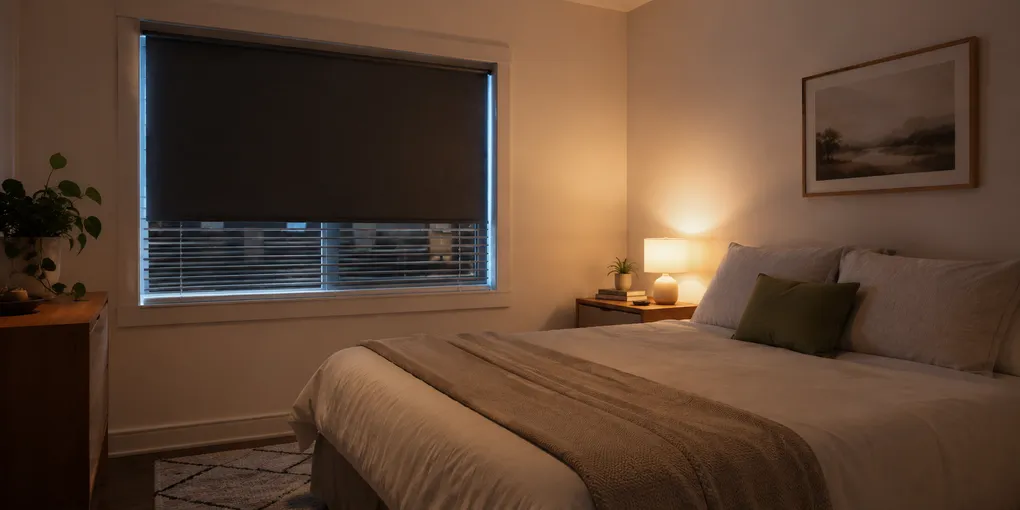
You close the blinds, turn off the lamp, sink into bed—and the room still has that annoying, ambient glow. Maybe it is a stubborn streetlamp right outside your apartment window. Maybe your east-facing bedroom gets bright before your alarm. Or maybe the standard rental blinds block the middle of the window but leave bright halos around every edge.
The good news: you do not need blackout curtains to make your bedroom darker. In many bedrooms, the smartest fix is more targeted. Instead of covering the whole wall with heavy fabric, focus on the exact places where light is leaking in.
This guide is for renters, apartment dwellers, small-space sleepers, and anyone who wants a darker bedroom without drilling, permanent hardware, or a full window makeover.
Quick Answer: What Should You Try First?
Start with the source of the light.
If the whole window glows, try a temporary blackout shade or removable darkening film. If the blinds are mostly closed but the edges are bright, block the side, top, or bottom gaps. If the room is dark except for a strip under the door, use a draft blocker or rolled towel. If the room still feels bright after the window is handled, look for alarm clocks, chargers, routers, TVs, and other small electronics.
For most renters, the best order is:
- Adjust the blinds you already have.
- Add a removable window layer.
- Block light around the window edges.
- Stop hallway light under the door.
- Cover, dim, or move glowing electronics.
You do not need to do every step. Fix the brightest problem first, then add another layer only if the room still feels too light.
Do a 5-Minute Light Check Before Buying Anything
Before adding shades, film, or fabric, check where the light is actually coming from. Do this when the room bothers you most: early morning, late evening, or after the streetlights come on.
Stand in two places: next to the bed and next to the window. From the bed, look for the light that reaches your face, pillow, or wall. From the window, look for gaps around the frame, blinds, trim, and sill.
Apartment blinds often block the main glass but leave light around the sides. Vertical blinds can leak light between slats. Roller shades may look neat during the day but leave bright lines if they are slightly too narrow.
Also check under the door. In shared apartments or studios, hallway and bathroom light can brighten the bedroom more than you expect. Finally, scan the room for small lights from chargers, clocks, routers, humidifiers, fans, speakers, and power strips.
Compare Your Main Non-Curtain Options
Use this as a quick decision guide before choosing a fix.
| Solution | Best For | Light Blocking Potential | Daytime Friendliness |
|---|---|---|---|
| Temporary blackout shades | East-facing windows, streetlights, renters who need a quick fix | High when well-fitted | Good; many fold, clip, or lift |
| Blackout-style window film | Small rooms, ground-floor windows, rooms where fabric feels bulky | Very high on covered glass | Low; it usually stays dark all day |
| Privacy or darkening film | Glare, privacy, softening bright windows | Low to moderate, depending on film | Moderate; still allows some daylight |
| Tension rod with fabric | Deep window frames, cozy decor, no-drill setups | Moderate to high, depending on fabric and fit | Good; usually easy to slide open |
| Door draft blocker | Hallway light under the bedroom door | Targeted; only fixes door-gap light | Excellent; easy to move |
The biggest takeaway: fit matters as much as material. A dark shade can still let in light if it leaves a large side gap.
Use Temporary Blackout Shades for a Fast Window Fix
Temporary blackout shades are one of the most direct alternatives to blackout curtains. They are useful if you rent, cannot drill, or want something you can remove before moving out.
These shades often attach with peel-and-stick strips, clips, or another no-drill method. Some can be trimmed to fit the window. Others fold up during the day, which is helpful if you still want natural light in the morning.
This option works especially well for east-facing bedrooms, street-facing apartments, guest rooms, short-term rentals, and windows with plain trim. The key is careful measuring. Measure the full area you want to cover, not just the glass. If the shade sits inside the frame, measure the inside width and height. If you want to cover the trim, measure beyond the glass so the edges are protected.
For small bedrooms, a close-fitting temporary shade usually looks cleaner than fabric hanging far beyond the window.
One caution: adhesive is not equally safe on every surface. It may fail on dusty, damp, textured, cold, or freshly painted surfaces. It may also pull paint if removed too quickly. If you rent, test a small spot first and follow removal instructions slowly.
Try Removable Window Film If You Want Less Fabric
Window film is a good fit when you want the room darker but do not want curtains, rods, or fabric layers. It can be a lifesaver in small bedrooms where bulky curtains or heavy layers would crowd the wall and make the space feel cramped.
There are different types of film, so choose carefully. Privacy film can soften glare and make a window feel less exposed, but it may not make the room very dark. Blackout-style film blocks much more light on the covered glass, but it can also make the room dark during the day.
That trade-off matters. If your bedroom is only for sleeping, a darker film may be fine. If the room is also your home office, reading corner, workout space, or only source of daylight, a removable shade may be easier to live with.
Film can also work behind existing blinds. That way, you keep the rental window covering in place but add another light-reducing layer directly on the glass.
Before covering a full window, test a corner and check whether the film is designed to be removable. Clean the glass first so it applies evenly and is less frustrating to remove later.
Block Light Around Existing Blinds
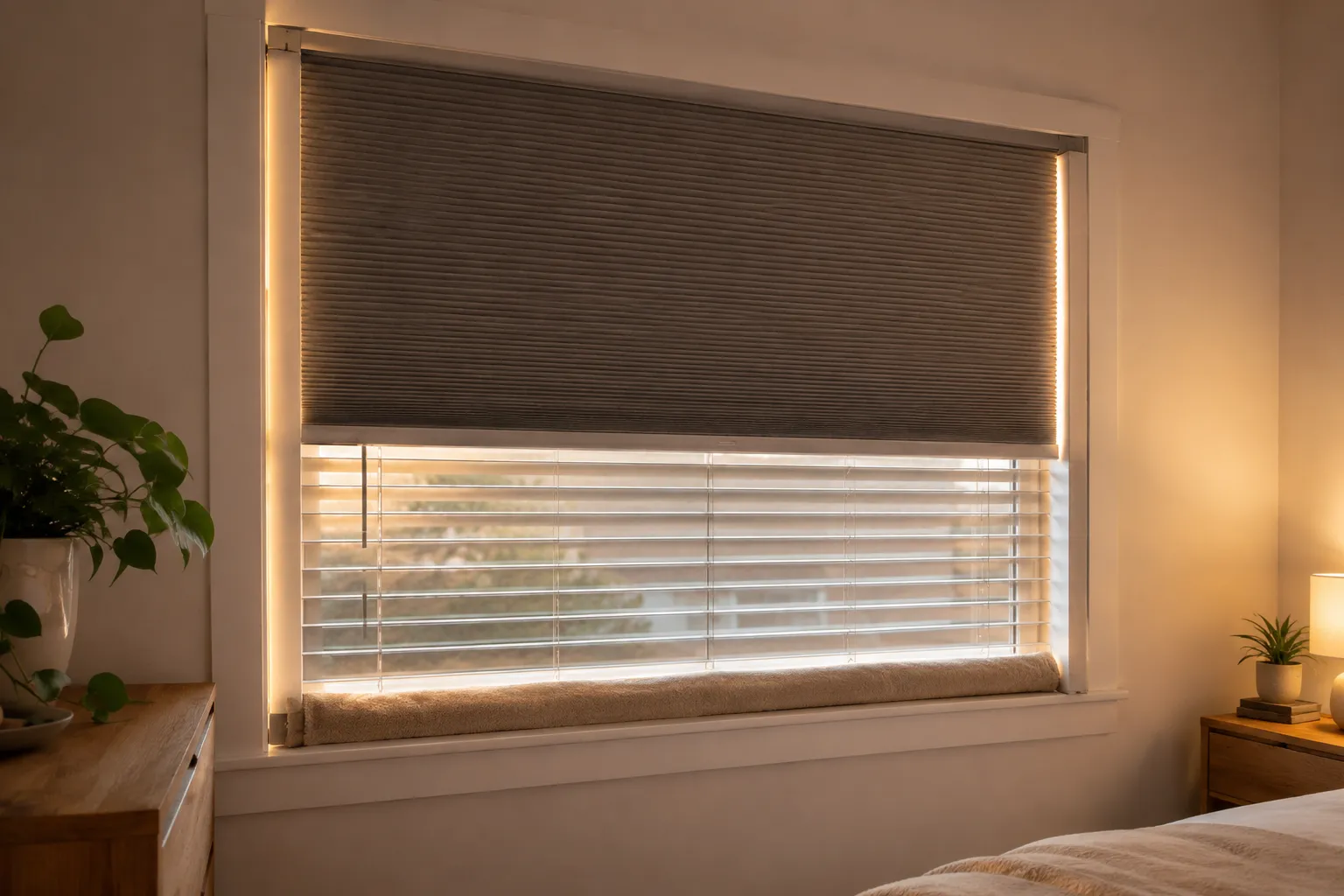
If your rental already has blinds, you may not need to replace them. You may only need to stop the bright lines around them.
Start by adjusting the slats. Tilt them both directions and check which angle blocks more light from the bed. If light comes from above, one direction may work better. If a streetlight shines straight across the room, the opposite angle may help.
Next, look at the side gaps. These are the bright vertical lines that show up even when the blinds are closed. Removable side channels, narrow fabric strips, foam strips, or carefully placed temporary tape can reduce those leaks.
Then check the top. If light spills over the blinds, add a lightweight removable cover above the blind line. This could be a small fabric strip, a temporary valance-style piece, or a shade placed slightly higher than the existing blinds.
For the bottom edge, use a rolled towel, soft draft blocker, or removable fabric strip along the sill at night. It is not fancy, but it is simple, cheap, and easy to undo in the morning.
Use No-Drill Fabric Without Hanging Blackout Curtains
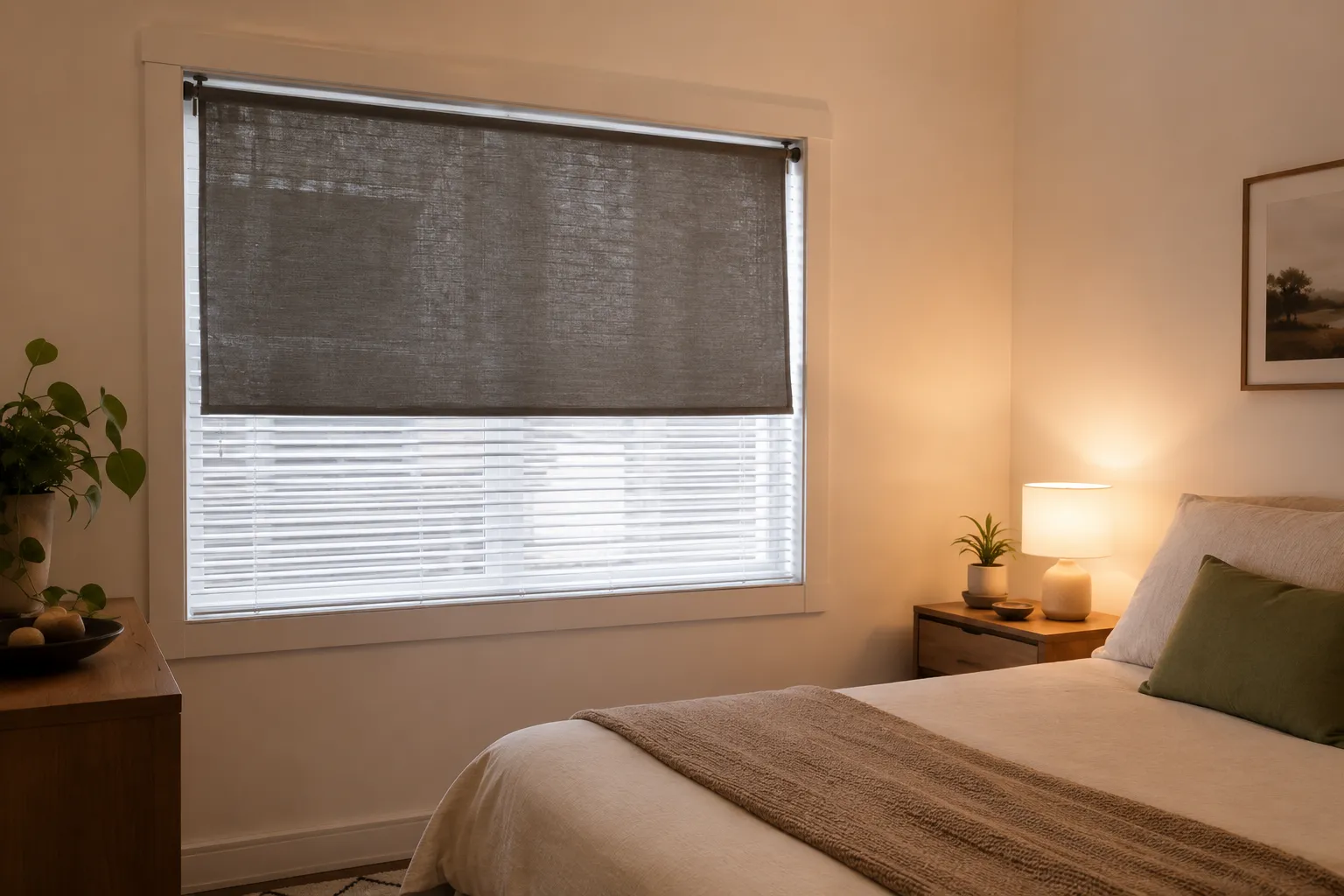
Avoiding blackout curtains does not mean fabric is off-limits. It just means you may not want heavy panels, permanent rods, or a full curtain setup.
A tension rod inside the window frame can hold a lightweight fabric panel without screws. This works best with recessed windows and narrower openings. Choose fabric that is dense enough to reduce light but light enough for the rod to hold securely.
No-drill brackets and adhesive hooks can also work, but be realistic about weight limits and surface conditions. Humidity, old paint, textured walls, and repeated tugging can all affect how well they hold.
For wide windows or sliding doors, a floor-to-ceiling tension pole may be more stable than a small rod. Keep the fabric simple and close to the window so the room still feels calm rather than crowded.
Stop Light From Coming Under the Door
Do not ignore the door. In many apartments, the window is not the only source of unwanted light.
If a hallway, bathroom, kitchen, or living room light shines under the bedroom door, use a fabric draft blocker or a rolled towel before bed. This is one of the easiest no-install fixes because you can move it in the morning and store it beside the door.
You can also reduce the light source itself. Close the bathroom door, turn off the hallway light, or use a lower lamp in the living room if someone else is still awake.
Just keep the walking path safe. You should be able to get out of bed and move around without tripping.
Reduce Small Lights Inside the Bedroom
Once the window and door are darker, small electronics often become more noticeable.
Turn alarm clocks away from your pillow. Move routers and power strips behind furniture or outside the bedroom if practical. Use the dimmest setting on humidifiers, fans, speakers, and smart-home devices.
For tiny indicator lights, removable light-blocking stickers or a small piece of tape can help. Do not cover vents, smoke alarms, cameras, sensors, or safety indicators. If covering a light would interfere with the device, move the device instead.
Make the Room Feel Darker With Softer Surfaces
Sometimes the issue is not only direct light. It is reflected light.
A mirror facing the window can bounce morning light toward the bed. Glossy furniture, shiny decor, pale bedding, and bright floors can also make a small amount of light feel stronger.
You do not need to redecorate the whole room. Move a mirror, shift glossy decor away from the window, or add a darker throw, rug, or upholstered headboard near the bed. These changes will not block light at the source, but they can make the room feel softer and less harsh.
What to Avoid in a Rental Bedroom
Avoid drilling, nailing, or installing permanent hardware unless your lease allows it. Avoid strong adhesives on delicate paint, old trim, textured walls, or surfaces that may peel.
Be especially careful in older buildings built before 1978 in the US. Pulling strong adhesive off painted trim or walls can chip old layers and may create a lead paint hazard if lead-based paint is present. When in doubt, use tension rods or ask your landlord before applying anything sticky to painted surfaces.
Do not block vents, heaters, smoke alarms, sensors, cameras, or emergency exits. Do not create a setup that is so annoying to open in the morning that you stop using it after a few nights.
Also, do not assume that anything labeled blackout will solve the whole room. A dark material still needs a good fit. Gaps can matter just as much as the shade itself.
A Simple Nightly Routine for a Darker Bedroom
Use this sequence when you want the room darker without making the setup complicated.
Step 1: Angle and Close the Blinds
Tilt your existing slats completely shut. If light comes from a high streetlamp, angling them upward often blocks the direct beam better.
Step 2: Deploy Your Temporary Layer
Drop your temporary shade, smooth your removable film layer, or slide your tension-rod fabric panel across the frame.
Step 3: Block the Door Gap
Place a fabric draft blocker or tightly rolled towel against the bottom of the bedroom door to reduce hallway light.
Step 4: Flip or Dim Internal Gadgets
Turn your alarm clock away from your pillow, flip your phone face-down, and check that bright charging lights are not pointing toward your eyes.
Once each item has a place, the whole routine should take less than a minute.
FAQ
Can I make my bedroom darker without blackout curtains?
Yes. Use removable window layers, block gaps around blinds, reduce hallway light, and cover or move small electronics. In many bedrooms, gap control matters as much as the window covering itself.
What should I try first?
Start with the brightest light source. If the window glows, add a temporary shade or film. If the edges glow, block the gaps. If the door glows, use a draft blocker. If electronics glow, move or dim them.
How do I block light around blinds?
Check the side, top, and bottom gaps. Use removable side blockers, fabric strips, foam strips, a lightweight top cover, or a rolled towel along the sill at night.
Is window film better than temporary shades?
It depends on how you use the room. Film is neat and low-profile, but it usually stays in place all day. Temporary shades are easier to open or remove when you want daylight.
How can renters darken a bedroom without damaging walls?
Use tension rods, removable shades, static or removable film, draft blockers, and small electronics fixes. Be cautious with adhesives, especially on painted trim, older surfaces, or unknown paint.
What helps with light under the bedroom door?
A fabric draft blocker is the cleanest option. A rolled towel can also work at night and can be moved in the morning.
Can a sleep mask replace room-darkening fixes?
A sleep mask can help when you cannot fully control the room, but it is usually best as a backup. If a bright window or hallway light bothers you, fixing the source can make the bedroom more comfortable overall. When a mask is the practical layer you need, use this guide to choose a sleep mask that actually feels comfortable.
Final Thoughts
Making your bedroom darker without blackout curtains is mostly about solving the right problem. You may not need a full window makeover. You may just need to block a side gap, add a removable shade, cover a glowing device, or stop hallway light under the door.
Start with the light you notice most from the bed. Fix that first. Then add one simple layer at a time until the room feels darker, calmer, and easier to use every night.