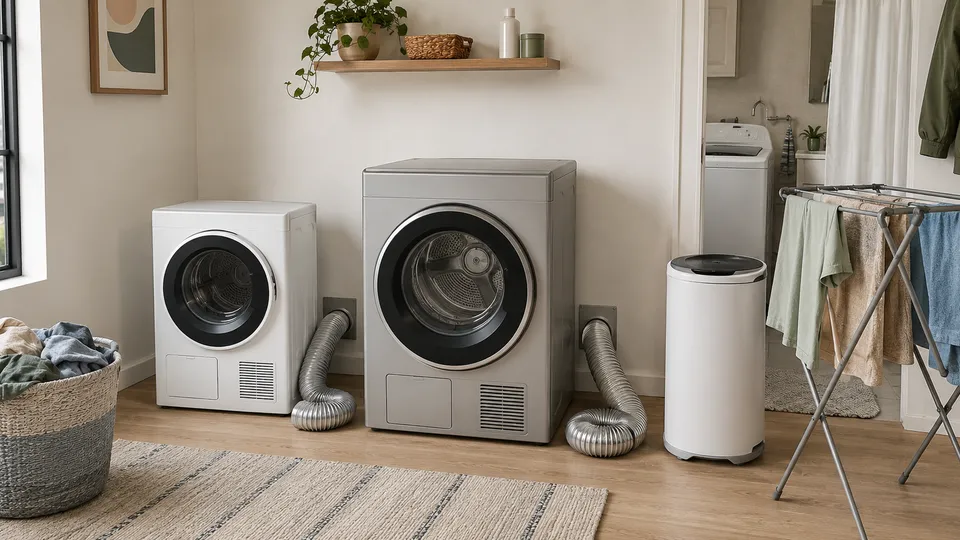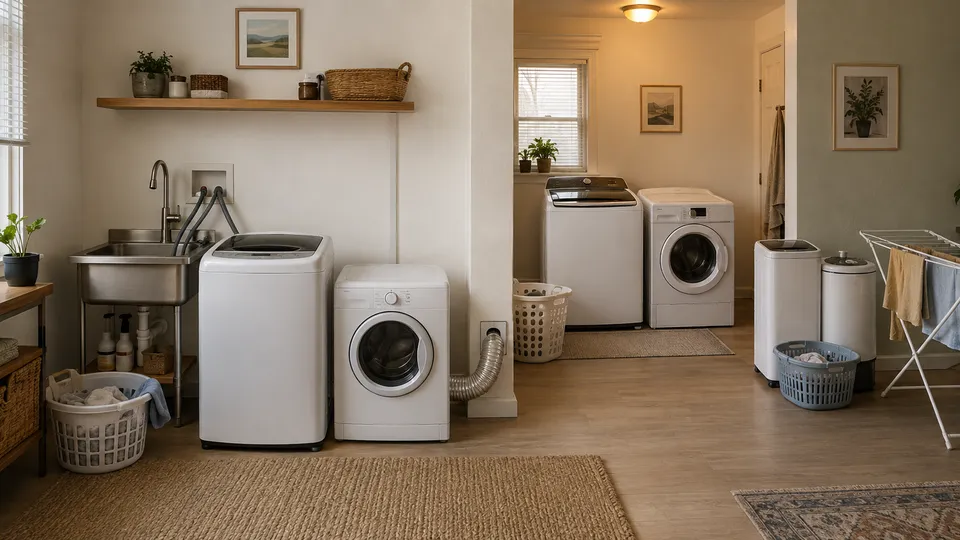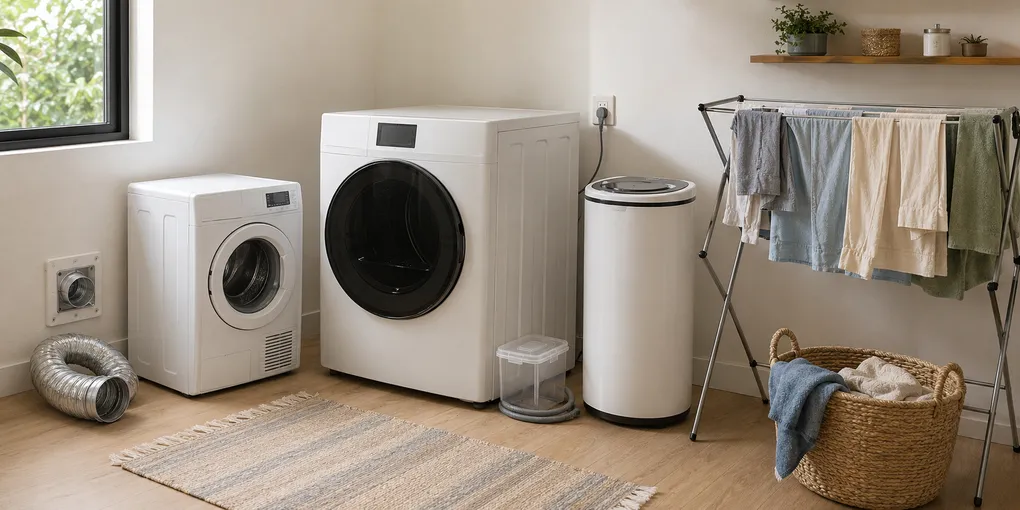
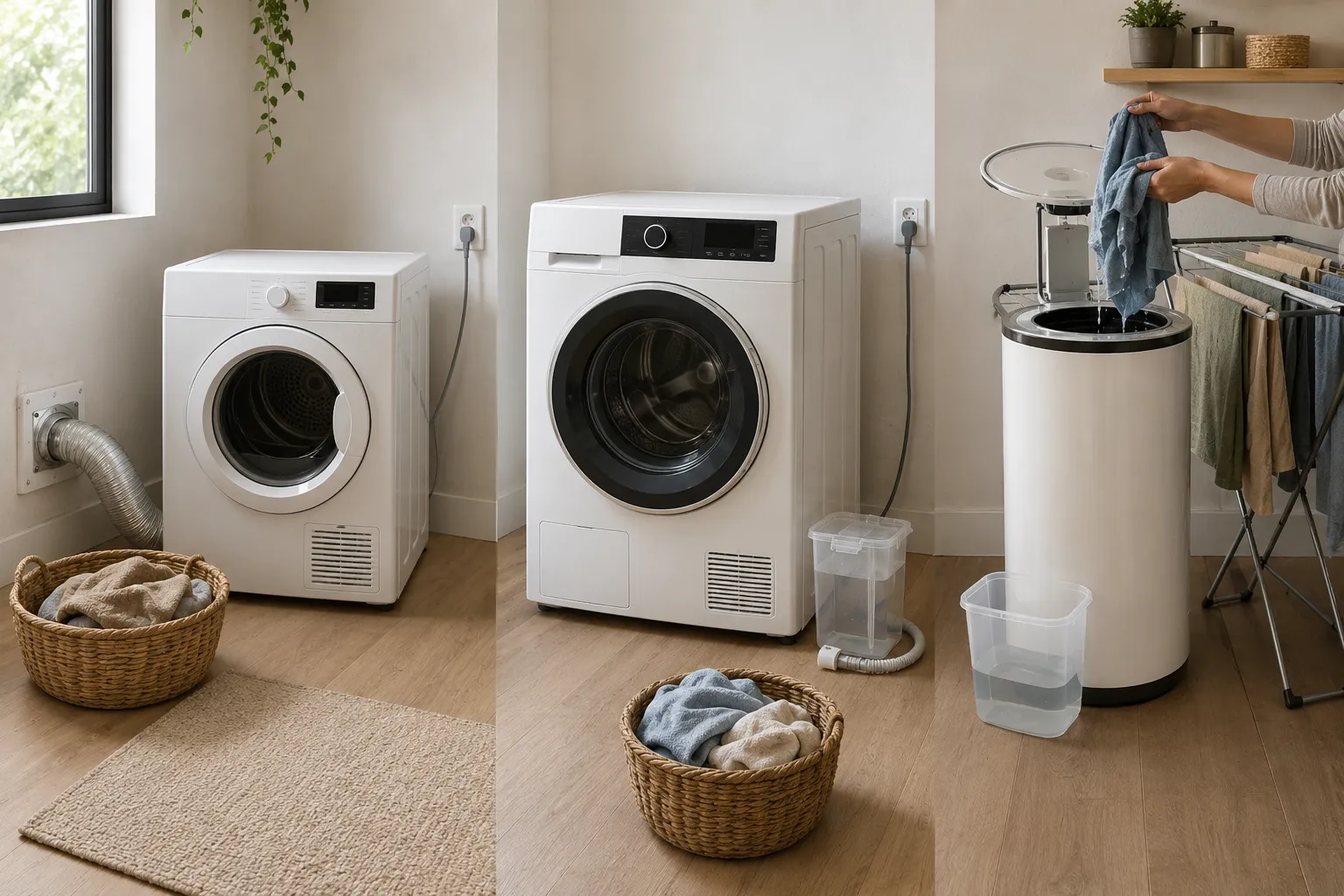
Some portable dryers need to be vented. Others do not. The deciding factor is the exact drying technology, not the word “portable” in a product title.
A small vented tumble dryer still moves heated, moist air through an exhaust connection. A true ventless heat-pump or condenser dryer does not need an external exhaust duct, but it is usually a larger, heavier appliance with its own power, water-management, and space requirements. A centrifugal spin dryer needs neither heat nor an exhaust route, but it removes water rather than fully drying clothing.
This guide explains the categories before you buy. It does not approve an indoor venting method, override a lease, or provide instructions for modifying a dryer or an apartment.
Quick Answer
| Dryer category | Does it need an external exhaust route? | What it actually does |
|---|---|---|
| Compact vented tumble dryer | Yes, when the exact manufacturer instructions say it is vented. | Uses heat and airflow to finish drying clothes. |
| Heat-pump or condenser dryer | No external exhaust duct. | Uses a closed drying system, but remains a full-size appliance category with its own installation requirements. |
| Centrifugal spin dryer | No exhaust route. | Spins water out of washed clothes; the load still needs hanging time. |
The safest buying rule is simple: read the exact model documentation before you decide that your apartment can support the appliance. Do not substitute a generic “portable dryer vent kit” listing, a forum post, or a different model’s manual for the manufacturer’s instructions.
Vented Portable Dryers: Compact Does Not Mean Ventless
The BLACK+DECKER BCED26 and BCED37 show why product labels need to be read carefully. Both are compact products, both use a standard outlet, and both are still explicitly listed by BLACK+DECKER as vented dryers.
| Model | Manufacturer-listed power | Capacity and body size | Venting and care signals |
|---|---|---|---|
| BLACK+DECKER BCED26 | 1,400 W, 120 V | Up to 8.8 lb.; 23.6 W x 17.1 D x 27.5 H in | Vented dryer; includes an exhaust connector; double-layer lint filter. |
| BLACK+DECKER BCED37 | 1,500 W, 120 V | Up to 13.2 lb.; 23.6 W x 21.5 D x 27.5 H in | Vented dryer; includes an exhaust connector; double-layer lint filter. |
These facts are useful because they separate two decisions that product listings often blur:
- A standard outlet may satisfy part of the electrical requirement.
- It does not remove the manufacturer’s exhaust, lint-care, heat, clearance, or rental requirements.
Do not buy a compact vented dryer first and try to make the apartment fit it afterward. Confirm the exact manual, the available location, and the building’s rules before ordering. If those answers are not clear, a smaller dryer is not automatically a safer dryer.
For the product-by-product comparison, including which role each of these models serves, read the best portable dryers for apartments.
What “Ventless” Actually Means
“Ventless” should describe a dryer that is designed to operate without an external exhaust duct. It should not be used as a casual label for every small dryer that has a flexible hose, a water container, or a compact footprint.
A real heat-pump dryer is one example of a ventless category. The Miele TXD160WP specification sheet identifies it as a heat-pump dryer with 4.02 cu. ft. capacity, 120 V / 15 A power, a 23.5 in width, 33.5 in height, 25.9 in depth, and an approximately 131 lb. unit weight.
That example is deliberately not a portable-dryer recommendation. Its specifications show the important distinction: no external exhaust duct does not mean tabletop-sized, movable, inexpensive, or free of installation planning. A renter still needs to confirm the electrical supply, clearance, water-management options in the current manual, and rental approval for that exact appliance.
A Spin Dryer Is Not a Ventless Heated Dryer
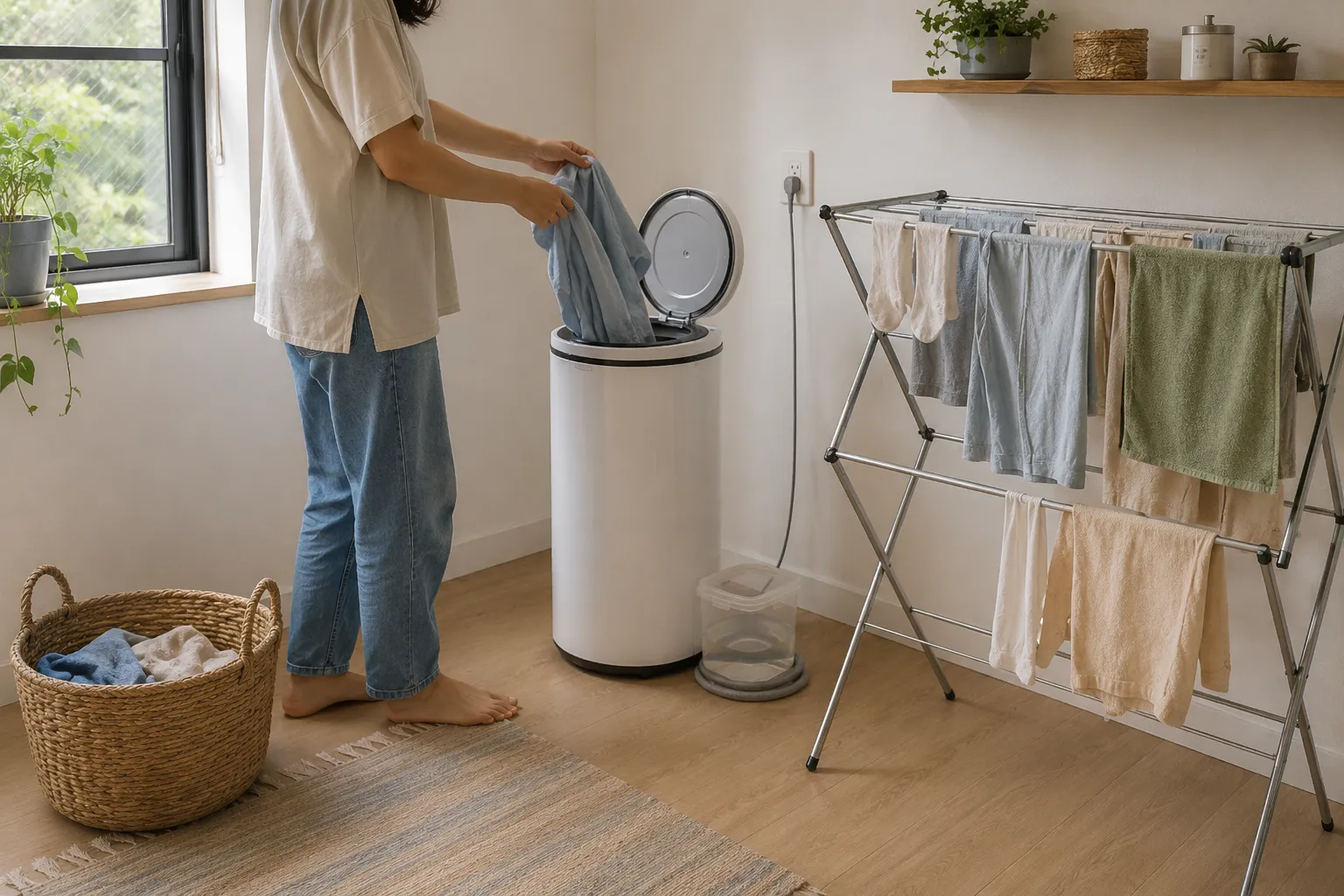
The Laundry Alternative Ninja 3200 RPM is a separate category from both vented and heat-pump dryers. Its manufacturer describes it as a no-heat, no-hookup centrifugal spin dryer with no exhaust or venting. The product page lists a 3200 RPM spin speed, use with a standard 110 V outlet, a stated wet-laundry load of up to 22 lb., and a 13 x 13 x 24 in footprint.
The same product page says users hang the load after spinning. That is the key limit. A spin dryer can reduce how wet the clothes are, but it does not perform a finished heated-drying cycle.
This can be a useful apartment option when a compact vented dryer’s exhaust conditions are unavailable or unapproved. It still requires a stable location, a suitable outlet, a practical way to handle the water removed from clothing, and enough room to finish drying the load on a rack. No water hookup is not the same thing as no water-management responsibility.
The Apartment Decision Tree
Use the following order before comparing brands or accessories.
1. Does the exact dryer documentation call it vented?
If yes, treat an acceptable exhaust arrangement as a condition of purchase. Do not assume that a small body, a standard plug, or a product called “portable” changes that requirement.
2. Is it genuinely ventless heat-pump or condenser technology?
If yes, verify the complete appliance specification. Check its size, weight, electrical requirement, water-management instructions, maintenance, and lease rules. A ventless appliance can still be unsuitable for a rental or too large for the intended location.
3. Is it a centrifugal spin dryer?
If yes, plan for rack drying after the spin cycle. The benefit is less water in the fabric, not a fully dry load.
4. Is the apartment approved and physically ready?
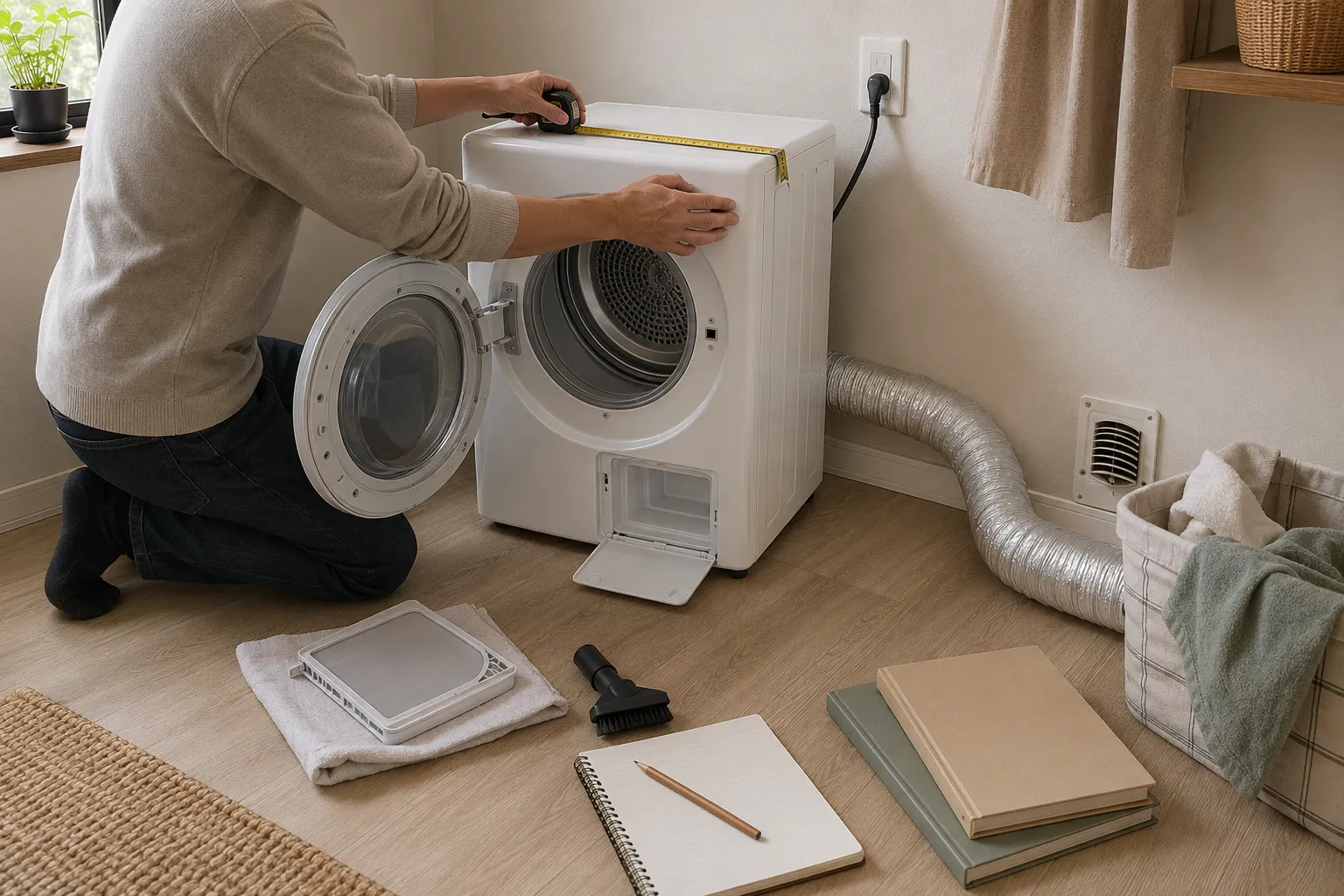
The final check applies to every category: rental permission, a suitable outlet, stable floor space, door clearance, lint or filter access, and a realistic routine for damp clothing. Compact appliances still need a complete workflow.
For a washer-side version of this process, see can you use a portable washing machine in an apartment.
If those rental and drainage checks are already settled and you only need to choose the washing appliance, compare portable washing machines for apartments by automatic versus twin-tub workflow, regular load size, and storage space before choosing a dryer.
Choose the Product Path After the Venting Check
Once you know whether the apartment can support the exact dryer category, use that answer to narrow the purchase instead of continuing to compare every small appliance in the same shopping list.
| Your documented apartment constraint | Practical next choice | Read next |
|---|---|---|
| The exact compact dryer is vented, and you have a permitted exhaust route, suitable outlet, clearance, and lint-care access. | Compare compact heated dryers by load size, power, footprint, and the exhaust boundary stated for each model. | Best portable dryers for apartments |
| You do not have a permitted external exhaust route, but you can manage a drying rack. | Treat a centrifugal spin dryer plus rack drying as a separate no-heat route; do not buy a vented tumble dryer expecting to make it ventless later. | The dryer comparison above separates the spin-and-rack route from compact heated models. |
| You are choosing the washing appliance and drying method together. | Compare the entire faucet, drain, transfer, exhaust, outlet, and rack-drying workflow before ordering two appliances. | Portable washer and dryer setups for apartments |
Common Mistakes to Avoid
Calling Every Small Dryer “Ventless”
This is the most important wording mistake. A compact, 120 V dryer can still be vented. Read the product’s current manual and technical page instead of relying on a marketplace title.
Treating a Forum Workaround as an Installation Rule
Search results often include videos, comments, and generic accessories. They can show what another person attempted, not what your dryer manufacturer, building manager, insurance policy, or local conditions approve. This guide intentionally does not turn those examples into instructions.
Treating a Spin Dryer as a Finished Dryer
A spin dryer is useful only when the remaining hanging step fits the apartment. It does not eliminate laundry racks, damp clothes, or drying time.
Forgetting Lint and Access
A dryer that technically fits a corner may still be a poor choice if you cannot open its door, reach its filter, or leave the clearance its manual requires. Measure the entire routine, not just the machine body.
FAQ
Do portable dryers need to be vented?
Some do. The BLACK+DECKER BCED26 and BCED37 are examples of compact models that their manufacturer explicitly identifies as vented. A centrifugal spin dryer does not need an exhaust route, while a true heat-pump or condenser dryer is designed without an external exhaust duct. Always verify the exact model documentation.
Can I use a vented portable dryer in an apartment?
Only when the exact model’s requirements, the apartment’s physical conditions, and the rental rules all support the proposed use. A removable or compact appliance does not override exhaust, electrical, clearance, lint-care, or lease requirements.
Does a ventless dryer need a drain?
The answer depends on the exact model and its manufacturer instructions. A no-external-vent dryer can still have water-management requirements. Check whether the exact appliance uses a container, an optional drain path, or another documented method before purchase.
Can a spin dryer replace a clothes dryer?
No. It removes water through spinning but does not use heat to finish the load. Plan to hang clothes after the spin cycle.
Can I use an extension cord with a portable dryer?
Follow the exact model manual. Do not build a dryer setup around an extension cord or power strip because the preferred location is too far from a suitable outlet.
Bottom Line
The answer is not yes or no for every portable dryer. A compact tumble dryer may be small and still require an exhaust arrangement. A true heat-pump dryer may need no external vent and still be too large or heavy to be called portable. A spin dryer may need no heat or exhaust and still leave you with rack drying.
Choose the category only after the apartment can support the complete routine. Then use our portable dryer comparison for apartments to compare the specific compact heated and no-heat options.