Coffee pods and ground coffee solve different problems. Pods reduce measuring and make a one-cup routine feel predictable. Ground coffee gives you more control over the coffee you buy and the way you brew it, but it adds a few steps: measuring, filtering, and cleaning up grounds.
For a small apartment, neither option wins automatically. A capsule machine can keep a rushed morning simple, but the pod boxes need storage. A ground-coffee setup can use a small reusable filter or paper filter, but it needs a clear place for coffee, filters, and cleanup. The best choice depends on what makes your morning harder: a cluttered counter, limited cabinet space, a rushed schedule, or a routine you do not want to clean up afterward.
This guide compares the daily tradeoffs without claiming that one method makes universally better coffee. It also explains the middle option many buyers miss: some single-serve brewers can use either capsules or a compatible reusable filter filled with ground coffee.
If you already know you want to avoid capsules, compare the product types in our guide to pod-free single-serve coffee makers for small apartments. This article helps you decide before you buy the machine.
For the broader machine choice, including compact drip, manual, espresso, and all-in-one setups, see our coffee makers for small apartments guide.
Quick Answer
Choose coffee pods when the priority is fast, pre-portioned coffee with the fewest preparation steps.
Choose ground coffee when you want to choose your own coffee and are comfortable measuring, filtering, and cleaning up after each cup.
Choose a reusable-filter option when you want a single-serve machine but do not want every cup to require a capsule. Compatibility matters: confirm the exact brewer and filter before buying.
Choose paper-filter brewing when you prefer a simple disposable filter workflow and do not mind keeping filters in stock.
Coffee Pods vs. Ground Coffee at a Glance
| Daily factor | Coffee pods | Ground coffee |
|---|---|---|
| Preparation | Insert a compatible capsule and start the machine | Measure coffee, choose a filter method, and start brewing |
| Storage | Boxes or drawers of compatible capsules | A bag or container of coffee, plus filters if the brewer needs them |
| Cleanup | Remove the used capsule and follow the machine’s cleaning instructions | Discard grounds, rinse a reusable filter or basket, and wipe drips as needed |
| Choice of coffee | Limited to compatible capsule options | Use the grounds or beans that fit the brewer and your routine |
| Counter setup | Usually one machine plus capsule storage | Can be a machine, a manual brewer, or a machine plus grinder depending on the setup |
| Ongoing supplies | Compatible capsules | Coffee plus reusable filters or paper filters, depending on the brewer |
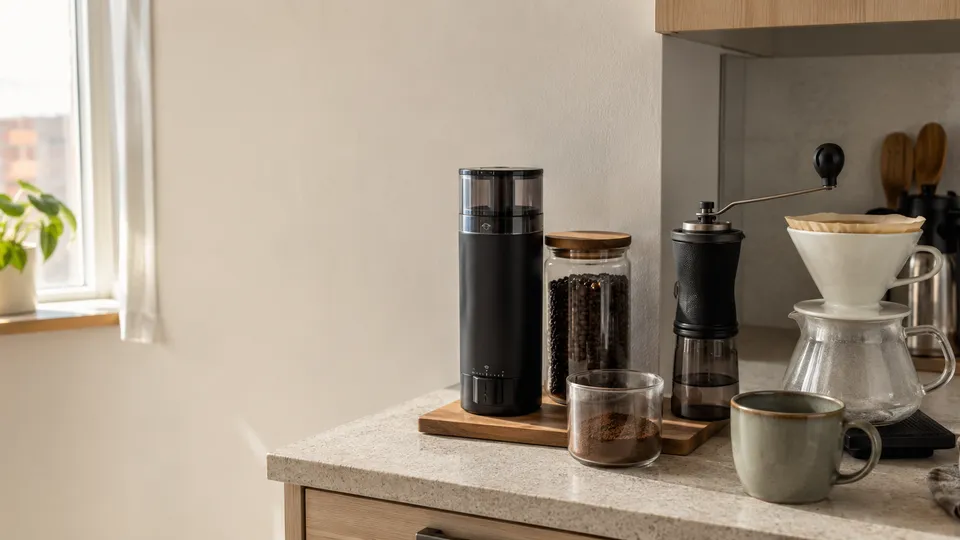
The table is a routine comparison, not a scorecard. A pod machine can be the better choice for someone who leaves early every morning. Ground coffee can be the better choice for someone who enjoys a slower routine and does not want to keep capsule boxes in a small cabinet. If whole beans are part of that slower routine, compare the storage, counter, and brew-method tradeoffs in our guide to compact coffee grinders for small apartments.
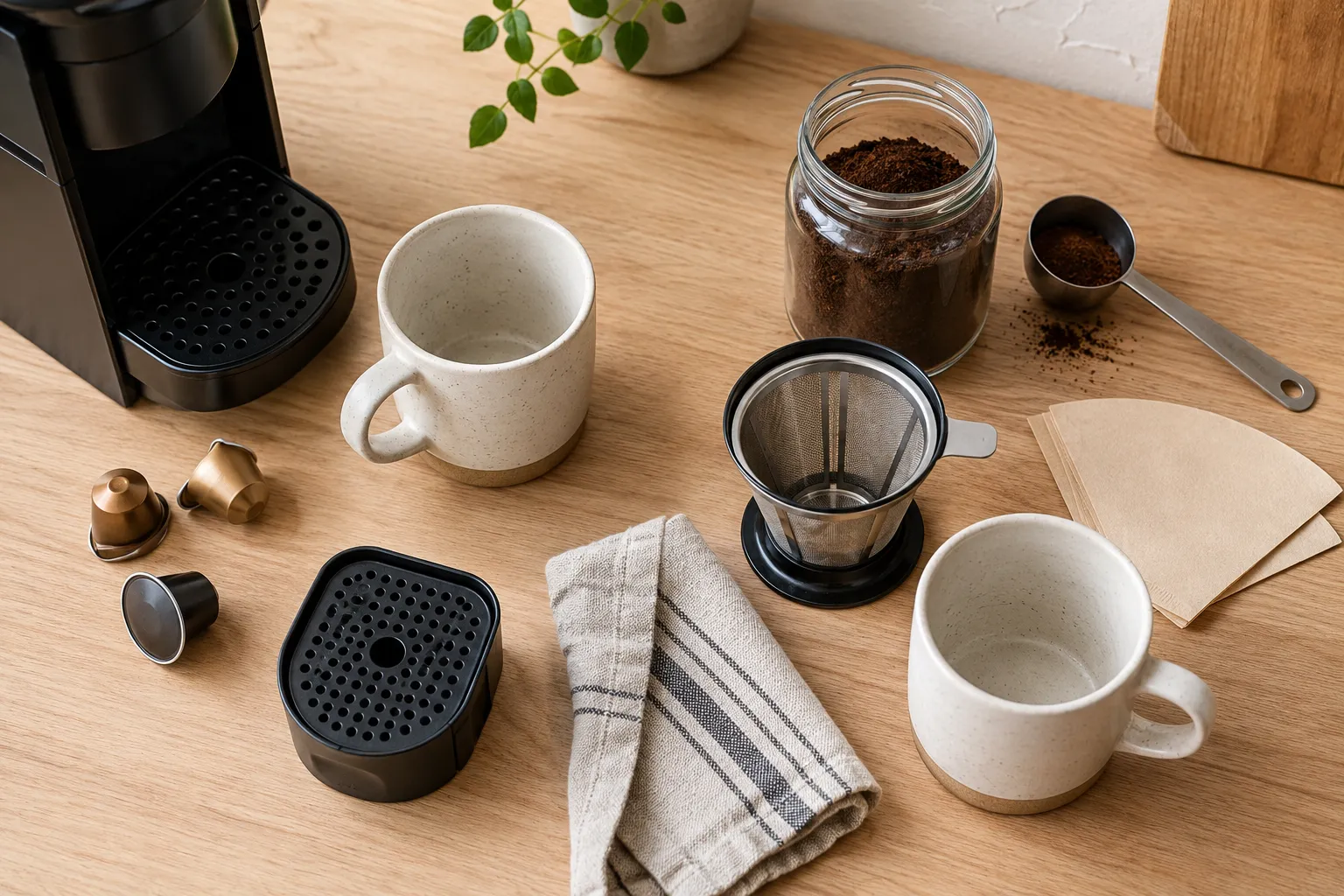
The Real Decision: What Do You Want to Handle Each Morning?
The difference is less about coffee identity and more about where you want the work to happen.
With pods, the measuring is done before the box reaches your kitchen. The routine is usually insert, brew, remove, and rinse the mug. That can be useful when the coffee station is a small section of counter near the door.
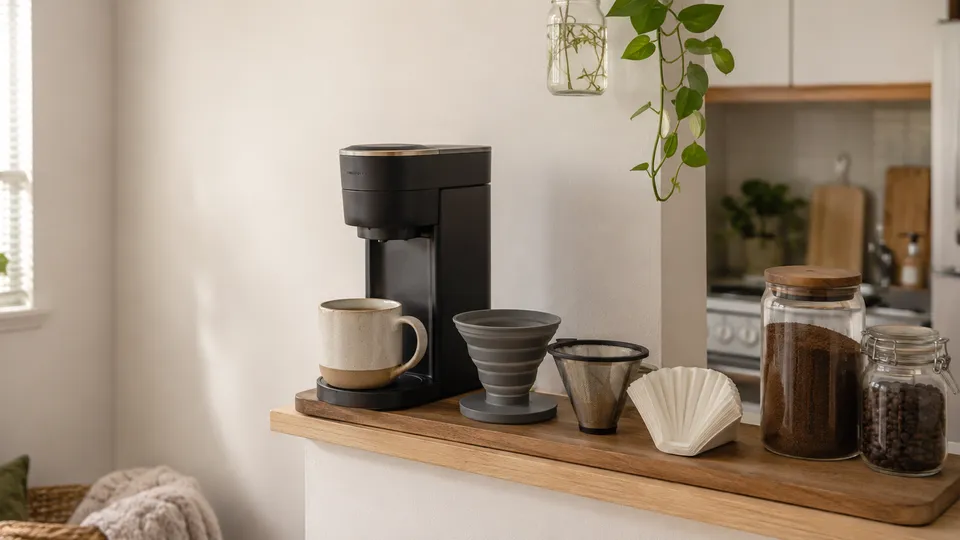
With ground coffee, you choose the coffee and control the amount you add. The routine may be only slightly longer, especially with a simple one-cup machine, but it includes handling the grounds and the filter. This can work well in a small apartment when the supplies have a defined home: a coffee container, filter basket or paper filters, a mug, and a small towel on one tray.
Neither setup needs a full coffee bar. A compact station is often easier to keep clean than a large collection of machines, syrups, mugs, and backup supplies. See how to set up a simple coffee or tea corner for a renter-friendly way to contain the routine.
The Middle Option: A Pod Machine With a Reusable Filter
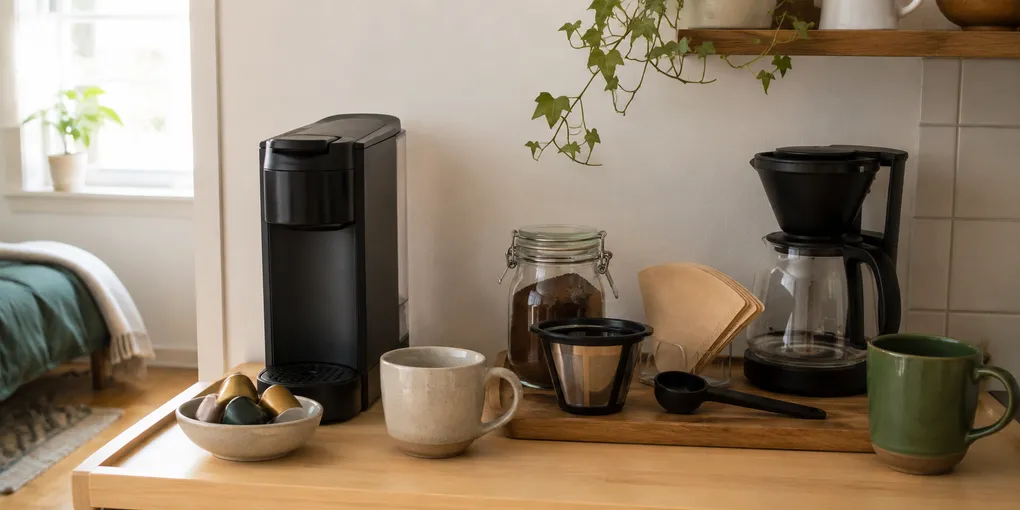
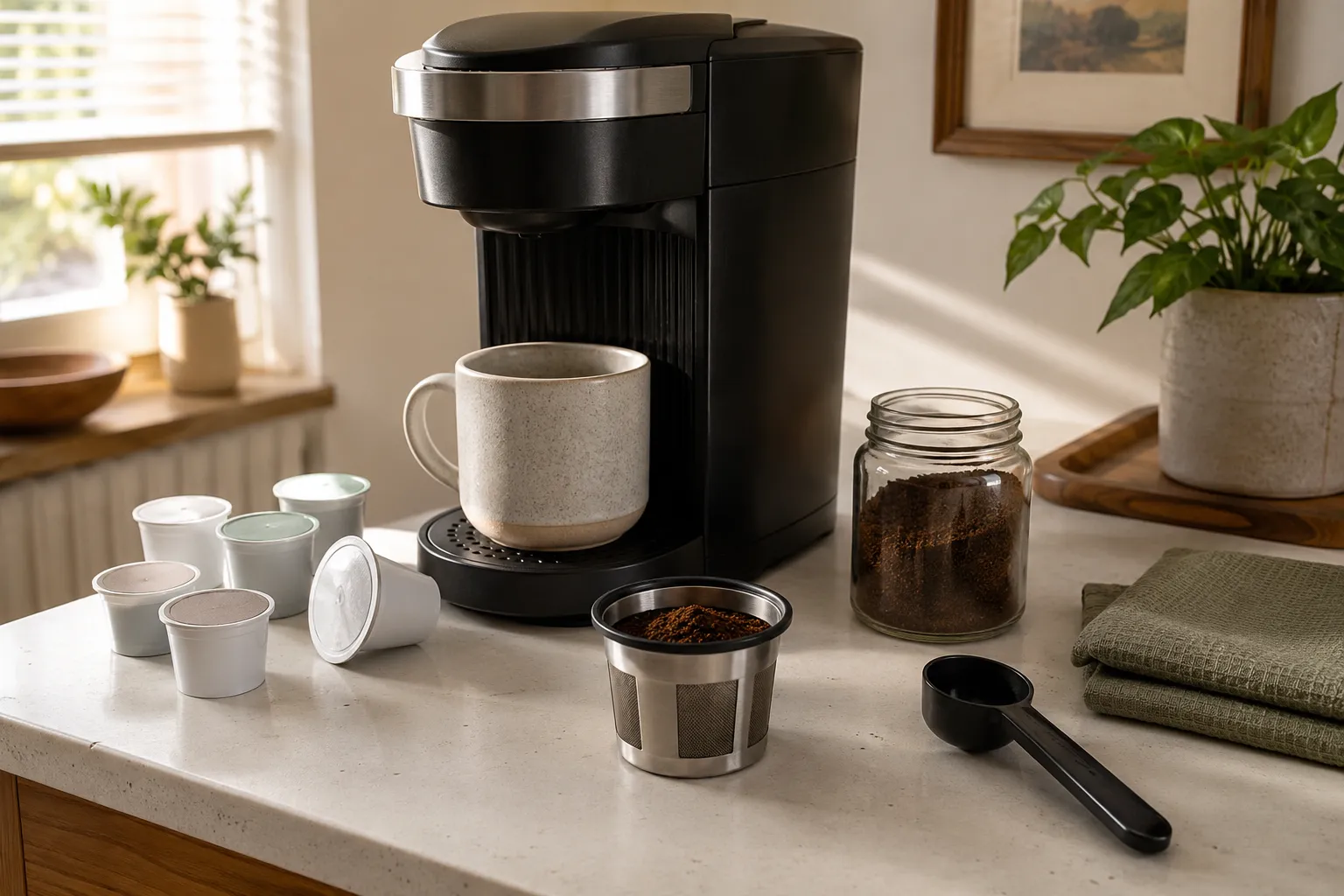
You do not always have to choose a dedicated pod machine or a separate ground-coffee brewer. Some single-serve systems support a compatible reusable filter that holds your own ground coffee.
For example, Keurig says its My K-Cup reusable coffee filter can be filled with ground coffee and used with a range of compatible Keurig brewers. That gives a household the option to alternate between ground coffee and K-Cup pods. It does not mean every reusable filter fits every machine, so check compatibility by exact brewer model rather than by brand name alone.
This hybrid route is useful when two people share a kitchen and have different habits. One person may want the convenience of pods while another wants a favorite bag of ground coffee. The tradeoff is that the reusable filter adds a part that needs emptying and rinsing after use.
Filters: Reusable, Paper, and Built-In
“No pods” still leaves several filter choices.
Reusable Filters
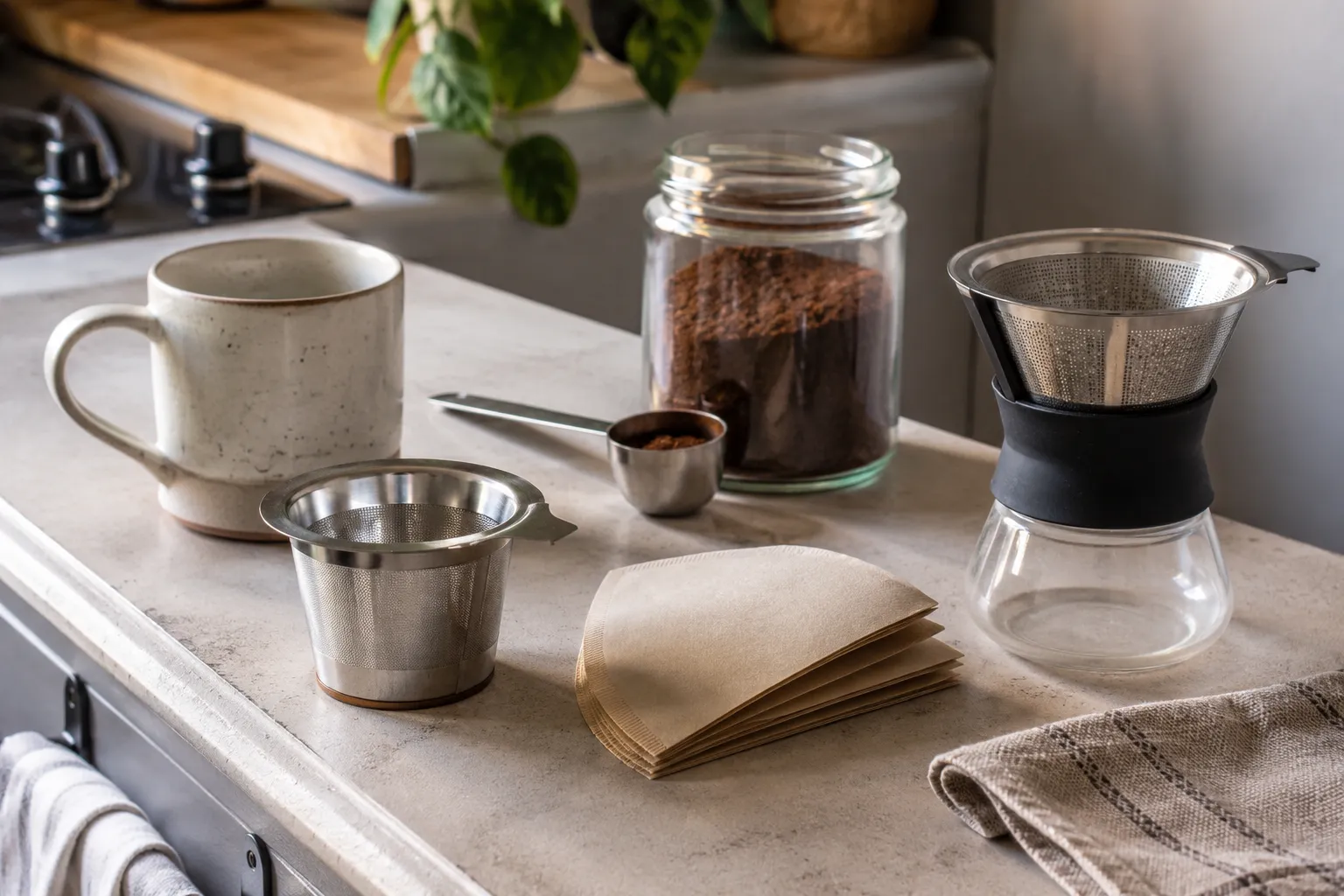
A reusable filter is filled with ground coffee, then emptied and rinsed after brewing. It can be built into a brewer or sold as a compatible accessory. The practical advantage is that you do not need a fresh capsule or paper filter for every cup. The practical tradeoff is cleanup: wet grounds and the filter need attention after each use.
The Cuisinart DGB-2, for example, includes a HomeBarista reusable filter cup for using your own coffee. The Hamilton Beach The Scoop is designed around ground coffee in its supplied Scoop filter. Those are pod-free approaches, but they still require a simple cleanup routine.
Paper Filters
Paper filters are another pod-free choice. They are a separate supply you keep near the machine, use once, and replace. The Moccamaster Cup-One uses #1 cone-shaped paper filters. That gives the buyer a clear supply list: ground coffee and the correct filters.
Paper filters can make cleanup feel straightforward because the grounds are contained in the used filter. They are still an ongoing item to store and replace, so they work best when you keep a backup box in the coffee station or cabinet.
Built-In Metal Filters
Some manual brewers use a built-in metal filter. The OXO Rapid Brewer, for example, has a built-in stainless steel filter and makes concentrated coffee that you dilute with water or milk. It avoids capsules and paper filters, but it is a more hands-on method than pressing one button on an electric machine.
The right filter is the one you will keep clean and stocked. Do not buy a reusable filter because it sounds efficient if you know you dislike rinsing wet grounds. Do not choose paper filters because they sound simple if you will forget to replace them.
Counter Space and Storage in a Small Apartment
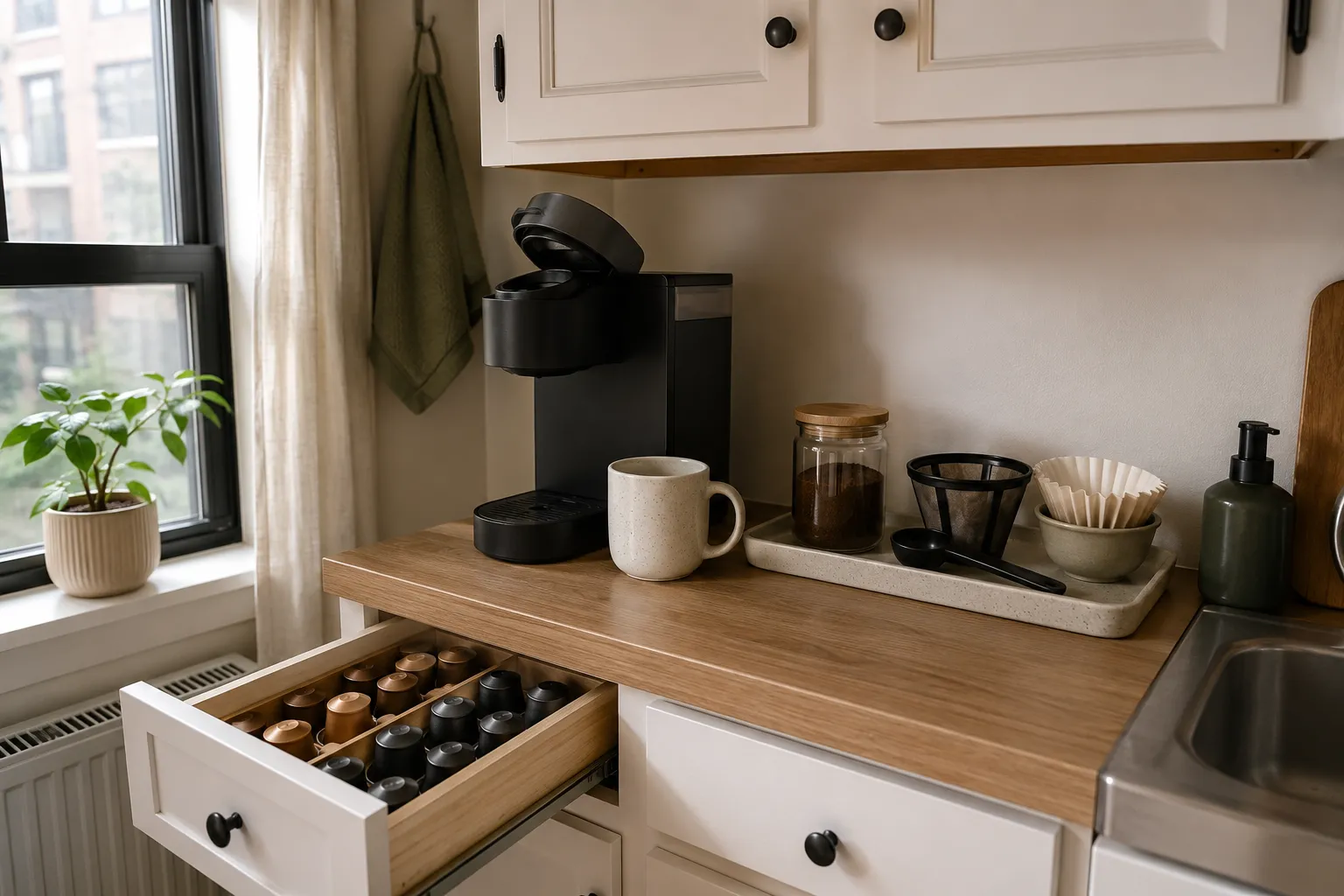
A coffee routine takes more space than the machine’s footprint. You also need room for a mug, coffee, a filter or capsule, and the small motions of filling, brewing, and cleaning.
Before choosing, check these practical details:
- Counter depth: Leave room to lift a lid, remove a basket, or place a mug under the brewer.
- Cabinet clearance: A tall machine or a water reservoir may not fit smoothly below upper cabinets.
- Supply storage: Decide where capsules, coffee, filters, or beans will live before they become counter clutter.
- Outlet access: Keep powered equipment near a safe, accessible outlet without running a cord across a sink, stove, or walkway.
- Cleanup path: Make sure the grounds, reusable filter, or used paper filter can go straight to the trash or compost bin without crossing the kitchen.
For a first apartment, it is often better to choose one flexible coffee method than to buy a pod machine, grinder, espresso appliance, and kettle all at once. Our guide to small appliances for a first apartment can help you decide what deserves permanent counter space.
Cost: Compare Your Real Routine, Not a Generic Number
Pods, grounds, paper filters, reusable filters, and beans all have different costs. But a universal price comparison is not very useful because coffee choice, serving size, how often you brew, and local pricing vary widely.
Instead, compare your own likely routine:
- How many cups do you make at home each week?
- What coffee or capsule would you actually buy repeatedly?
- Does your brewer need paper filters, a reusable filter, descaling supplies, or other replacements?
- Will you use the machine often enough to justify its counter space and maintenance?
A machine that looks inexpensive can become inconvenient if its required supplies are hard to find. A more involved ground-coffee routine can be wasteful for you if you rarely make coffee at home. The sensible choice is the one you will use consistently.
Which Setup Fits Your Routine?
Choose pods if you want the fewest preparation steps, value pre-portioned servings, and have a practical storage spot for compatible capsules.
Choose ground coffee with a reusable filter if you want to use your own coffee and are comfortable emptying and rinsing the filter after each cup.
Choose ground coffee with paper filters if you want a clearly defined single-use filter workflow and can keep the right filter size stocked.
Choose a hybrid reusable-filter accessory if you already have a compatible pod brewer but want the flexibility to use your own ground coffee sometimes.
Choose a manual pod-free brewer if the counter itself is the constraint and you do not mind a more hands-on process.
If whole beans are leading you toward an espresso routine instead of a filtered one-cup brew, compare the extra grinder, milk, and counter-space requirements in our guide to compact espresso machines for small apartments.
FAQ
Is ground coffee always cheaper than pods?
Not necessarily for every household. The answer depends on the coffee or pods you buy, serving size, filter method, and how often you make coffee at home. Compare the supplies you will realistically buy rather than relying on a generic per-cup estimate.
Can I use ground coffee in a pod coffee maker?
Sometimes. Some systems offer a compatible reusable filter, such as Keurig’s My K-Cup, which is designed for ground coffee with compatible brewers. Check the exact machine and accessory before buying because compatibility varies by model.
Do pod-free coffee makers need filters?
Many do, but the filter type varies. Some use a reusable basket or metal filter. Others use paper filters. The Moccamaster Cup-One, for example, uses #1 cone-shaped paper filters, while the OXO Rapid Brewer has a built-in stainless steel filter.
Which setup is easiest to clean?
That depends on what kind of cleanup you dislike. Pods reduce handling of loose grounds but still require removing the used capsule and cleaning the machine as directed. Reusable filters avoid capsules but need emptying and rinsing. Paper filters contain the grounds but need regular replacement. Choose the cleanup you are most likely to keep up with.
Is a reusable filter the same as a reusable pod?
Not always. A reusable filter can be a basket, cup, or built-in metal filter used with ground coffee. A reusable pod is a specific accessory shaped to fit a particular capsule brewer. Check the wording and exact model compatibility before ordering.
Bottom Line
Pods are about a fast, pre-portioned routine. Ground coffee is about choosing your coffee and accepting a little more preparation and cleanup. Paper filters, reusable filters, and hybrid accessories give you different ways to make either approach fit a small apartment.
Start with the routine, not the marketing. Once you know whether you prefer pods, grounds, a reusable filter, or paper filters, use our pod-free single-serve coffee maker guide to choose the right product type for your counter and schedule.