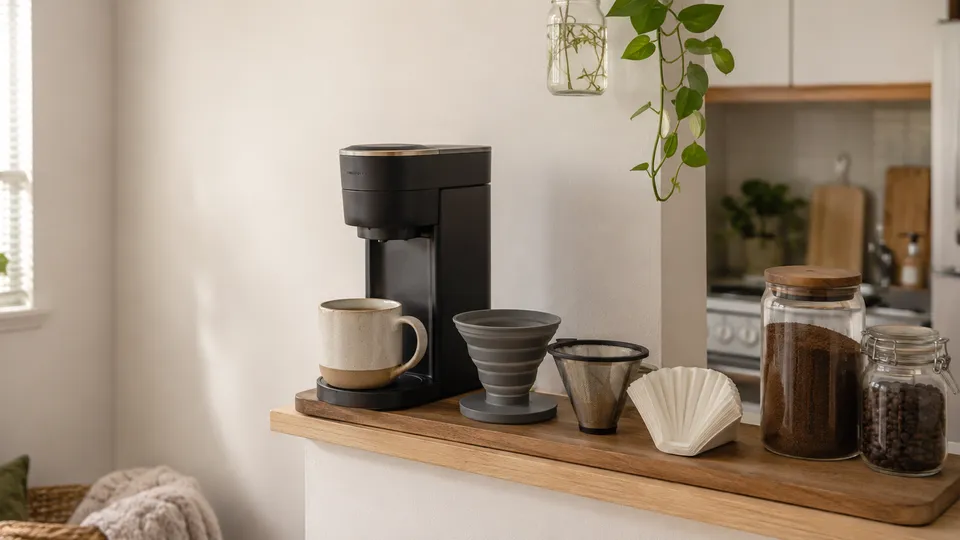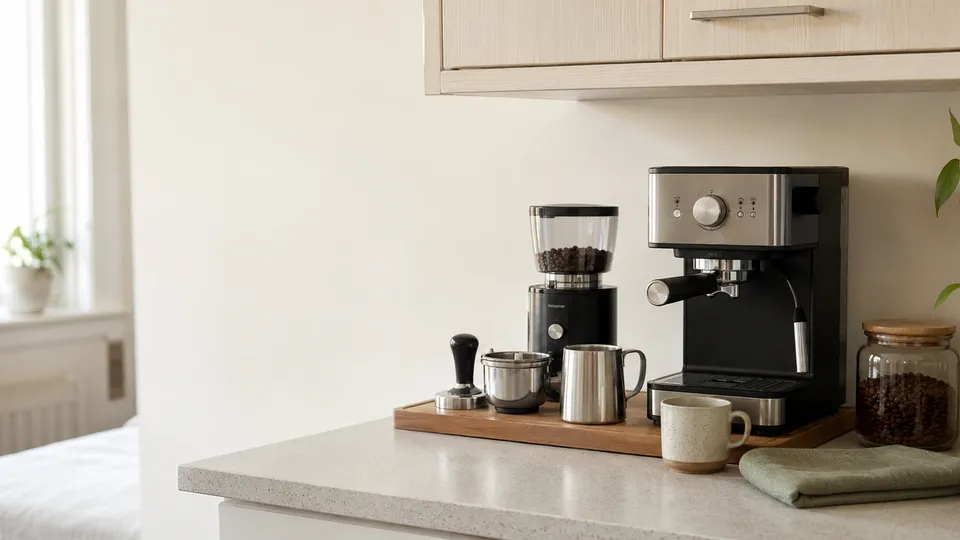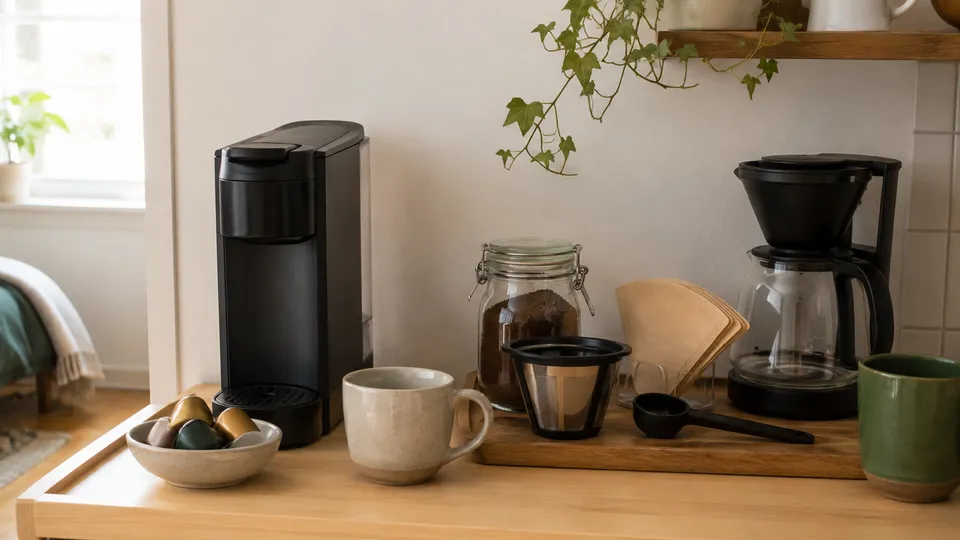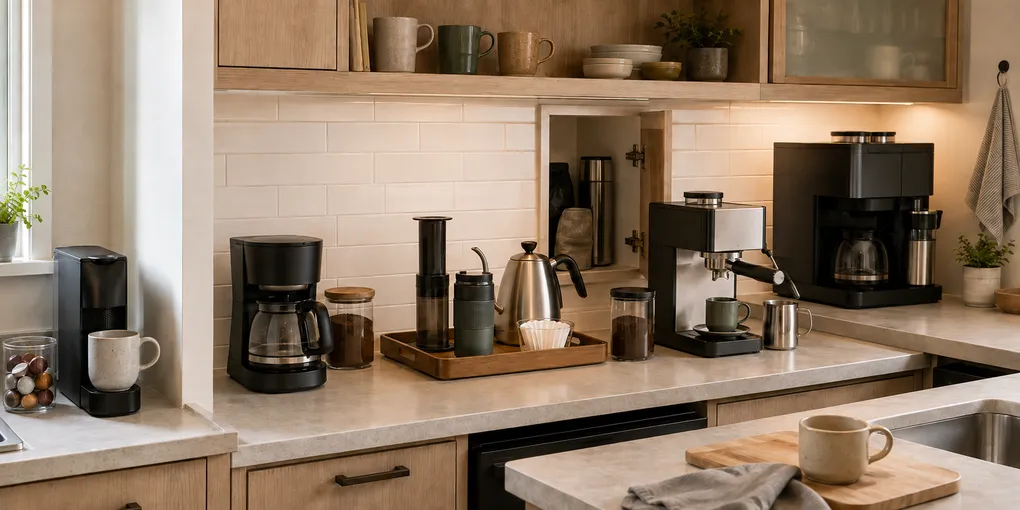
The best coffee maker for a small apartment is the one that fits the drinks you actually make, the counter you can spare, and the cleanup you will keep up with. A narrow pod brewer, a five-cup drip machine, a manual press, an espresso machine, and an all-in-one grinder system solve different problems. Calling one of them the universal best would hide the tradeoffs that matter in a small kitchen.
This guide compares five current products with deliberately different roles. Dimensions, stated capacities, included or documented brewing systems, electrical requirements where relevant, and warranty information were checked against manufacturer pages or official product documentation. It does not claim hands-on testing, current sale prices, or a universal best-tasting cup.
If you already know that you do not want capsules, start with our more focused guide to pod-free single-serve coffee makers for small apartments. If you know you want espresso, see compact espresso machines for small apartments. This page is the earlier decision: which coffee-making route belongs in your apartment at all?
Quick Picks
| Need | Pick | Why it fits |
|---|---|---|
| Best for the narrowest permanent counter spot | Keurig K-Mini | Manufacturer-listed 4.5 in width and 8-12 oz brew sizes |
| Best for a small shared pot without a large machine | Capresso 5-Cup Mini Drip | Five-cup drip format, GoldTone filter, and a listed 8 x 6.25 x 10 in footprint |
| Best when the counter must stay clear | AeroPress Go | Manual one-cup system that packs back into its included mug |
| Best for regular espresso and milk drinks | Breville Bambino Plus | Electric espresso format with a 54 mm portafilter and hands-free milk texturing |
| Best if one machine must cover several coffee formats | Ninja Luxe Cafe Premier ES601 | Built-in grinder and scale with espresso, drip coffee, and cold-brew modes |
Model availability, colors, bundles, and specifications can vary by market. Check the exact model number, electrical requirements, cabinet clearance, and current manufacturer documentation before buying.
How to Choose the Best Coffee Maker for a Small Apartment
Start with the drink and routine rather than a product feature list. This comparison is for apartment shoppers deciding among the main coffee-maker formats; it is not a list of five interchangeable machines. The right route depends on whether your priority is one fast cup, a small shared pot, stored equipment, espresso and milk drinks, or one larger appliance that replaces several coffee tools.
| Your normal routine | Better starting point | What you are accepting |
|---|---|---|
| One simple cup before work, with minimal width | Narrow single-serve brewer | Ongoing pod storage and the limits of a one-cup system |
| Two to five mugs for one or two people | Small-batch drip machine | A carafe, a brew basket, and a machine that stays on the counter |
| Coffee only some days, or no permanent appliance space | Manual brewer | Heating water and doing part of the brewing yourself |
| Espresso, cappuccinos, or lattes are the point | Compact espresso machine | A separate grinder or pre-ground espresso, portafilter handling, and milk cleanup |
| You switch between espresso and brewed coffee but want one main machine | All-in-one grinder system | More depth, height, weight, accessories, and a more involved cleaning routine |
For the supply decision behind the first and second rows, compare coffee pods vs. ground coffee for a small apartment. The product that looks smallest can still create the most storage pressure if it requires boxes of capsules, filters, beans, or extra accessories.
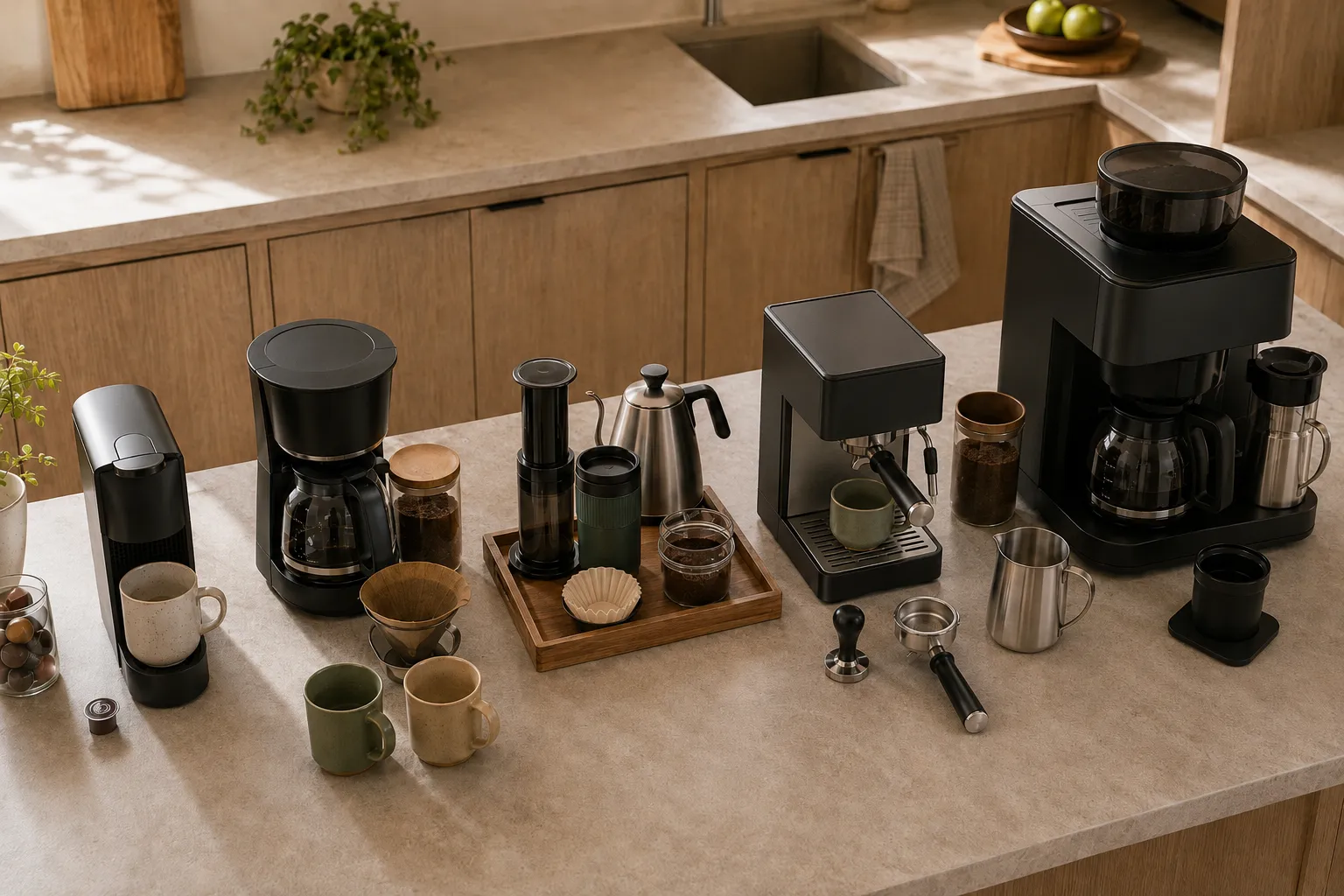
Counter Space Is a Working Footprint, Not Just a Product Measurement
Published dimensions are useful for ruling products out, but they do not describe the space needed to fill a reservoir, lift a lid, attach a portafilter, place a mug, or clean a basket. Measure the actual coffee area, including upper cabinets and the outlet, before deciding.
| Product | Manufacturer-listed size | Small-apartment planning note |
|---|---|---|
| Keurig K-Mini | 12.1 H x 4.5 W x 11.3 D in | Very narrow, but leave front room for a mug and space to load a pod |
| Capresso 5-Cup Mini Drip | 8 L x 6.25 W x 10 H in | Small footprint for a drip carafe, but the top still needs opening space |
| AeroPress Go | 4.5 H x 3.6 W in | Packs into its mug after use; you still need a stable surface for hot water and pressing |
| Breville Bambino Plus | 11.9 W x 7.4 D x 14.3 H in | Measure the actual model sold in your market and leave room for the portafilter and milk jug |
| Ninja Luxe Cafe Premier ES601 | 12.95 L x 13.39 W x 14.57 H in | A multi-format system, not a narrow appliance; plan bean-hopper, water, and accessory clearance |
Do not treat any of these figures as open-lid or working-clearance measurements. A tray can organize a coffee setup, but it cannot create clearance under a cabinet or room to handle a portafilter. For a broader layout approach, see how to set up a simple coffee or tea corner.
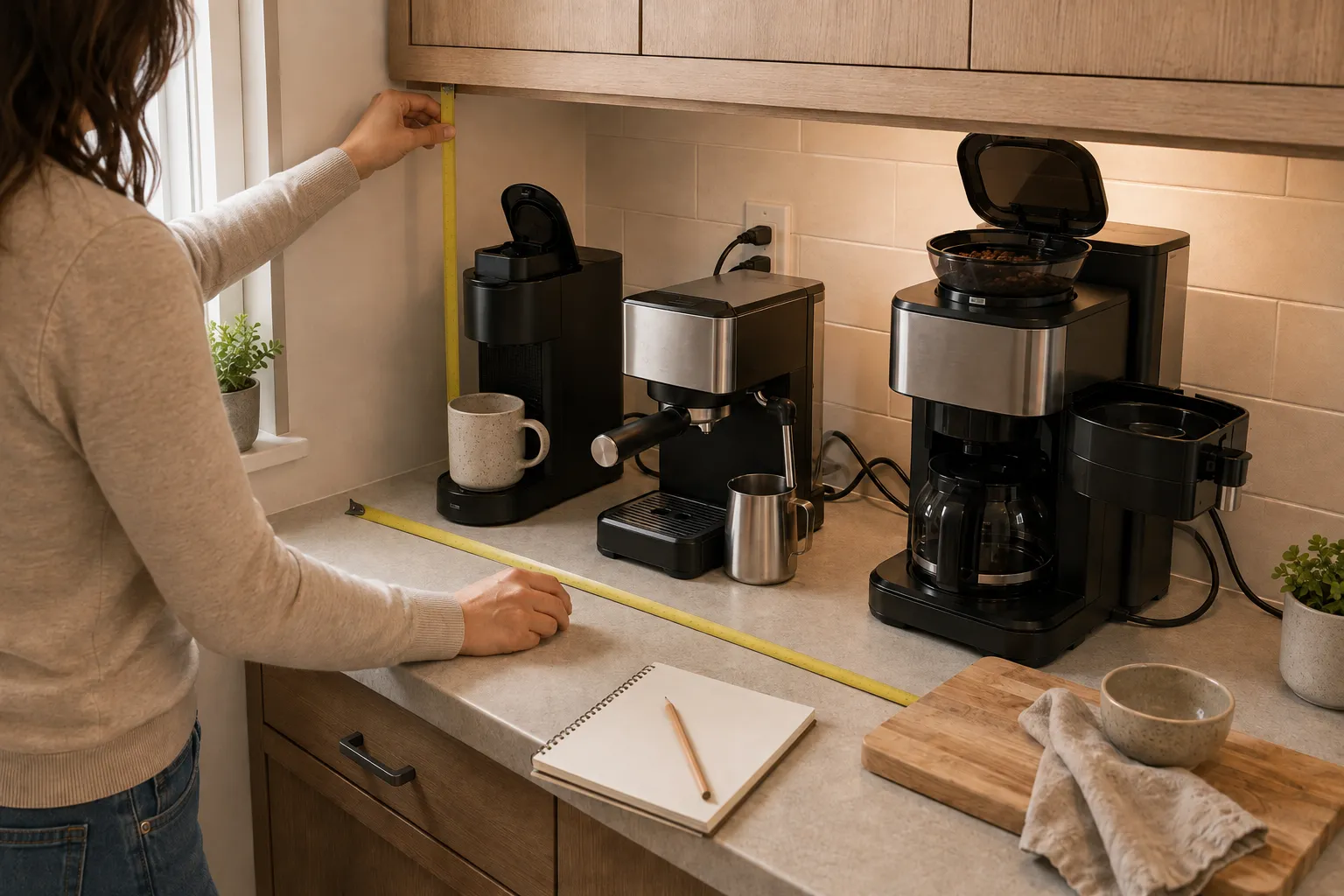
Best for the Narrowest Permanent Counter Spot: Keurig K-Mini
The Keurig K-Mini is the straightforward pod-based role in this comparison. Keurig lists the brewer at 12.1 in high, 4.5 in wide, and 11.3 in deep, and states 8 oz to 12 oz drink sizes. That narrow width is its real apartment advantage: it can occupy a strip of counter that would not accommodate most drip machines or espresso setups.
This is not a recommendation for every small apartment. It is the right role only when a single-cup, capsule-based morning routine is genuinely what you want. You will need room to keep compatible pods dry and accessible, and the machine does not replace a larger drip brewer when two people expect coffee at the same time.
Choose the K-Mini when counter width is the binding constraint and the convenience of a K-Cup routine matters more than using whole beans or making a carafe.
Best Small-Batch Drip Option: Capresso 5-Cup Mini Drip
The Capresso 5-Cup Mini Drip is the small-carafe choice for someone who wants ordinary drip coffee rather than one capsule at a time. Capresso identifies the current black version as model 426.05 and lists a five-cup capacity, a GoldTone filter, a 3 lb weight, and dimensions of 8 in long, 6.25 in wide, and 10 in high. The product page also lists a one-year limited warranty.
Its role is simple: you want enough coffee for more than one mug without giving a full-size drip brewer a permanent place on a small counter. The GoldTone filter means you do not have to make paper filters part of the routine, although it does need rinsing and periodic cleaning.
Choose the Capresso when you want a modest drip carafe for one or two people and prefer to work with grounds instead of capsules. It is not the right fit for espresso drinks or for someone who needs their coffee equipment to disappear into a drawer after each use.
Best No-Counter Option: AeroPress Go
The AeroPress Go is a manual, one-cup system for a kitchen where the best permanent coffee maker may be no permanent coffee maker. AeroPress lists an 8 oz capacity and compact 4.5 in high by 3.6 in wide dimensions. The company says the press packs back into the included lightweight mug, holds up to 25 micro-filters in its travel filter holder, and is top-rack dishwasher safe. It also lists a one-year warranty.
The key boundary is that this is a hands-on brewing method. You heat water separately, add ground coffee, press, discard the coffee puck, and rinse. AeroPress describes its drink as compatible with several styles, including espresso-style recipes, but it is not a plug-in espresso machine and does not steam milk.
Choose the AeroPress Go when storing the equipment after use matters more than pressing a button. It suits a cabinet, drawer, or compact coffee tray, but it requires a safe hot-water workflow and a little more active time each morning.
Best for Espresso and Regular Milk Drinks: Breville Bambino Plus
The Breville Bambino Plus is the compact electric espresso role. The current U.S. product page identifies model BES500BSS1BUS1 and lists a 54 mm stainless-steel portafilter designed for an 18 g dose, a 64 fl oz water capacity, 1,560 W power at 110-120 V, and a two-year limited warranty. Breville also describes hands-free automatic milk texturing with adjustable temperature and texture levels, alongside a manual option.
The appliance is compact relative to many espresso systems, but espresso still has a wider working footprint than the machine alone. You need room to handle the portafilter, place a milk jug, clean the steam-wand area, and either store pre-ground espresso or add a separate grinder. The Bambino Plus does not include a grinder.
Choose the Bambino Plus when espresso and milk drinks are the actual daily goal. If you only need regular coffee, its accessories and workflow are unnecessary. If espresso is your settled direction, use our compact espresso machine guide for a wider look at narrow manual and stored setups. If your choice is specifically between this machine and the narrower De’Longhi, read our Dedica Arte EC885M vs. Bambino Plus comparison.
Best All-in-One Upgrade: Ninja Luxe Cafe Premier ES601
The Ninja Luxe Cafe Premier ES601 is the conditional all-in-one choice: it is for a person who wants one primary machine to make espresso, drip coffee, and cold brew, rather than separate appliances. SharkNinja identifies the product as model ES601 and describes a three-in-one system with a built-in grinder and scale, 25 grind sizes, automatic grind-size recommendations, and four hands-free froth programs for dairy or plant-based milk. It lists a 12.95 x 13.39 x 14.57 in product size, a 25.73 lb weight, a 43 in cord, and a one-year limited warranty.
That versatility is not the same as being small. It is taller, deeper, and much heavier than the other options here. It also brings hopper access, water filling, drip-tray cleanup, milk components, and grinder care into one counter station. The benefit is replacing several devices, not being easy to store.
If you are deciding whether that guided multi-drink system is a better fit than a more traditional manual espresso routine, compare Ninja Luxe Cafe vs. Breville Barista Express.
Choose the ES601 only when you regularly want more than one coffee format and can give a larger appliance a planned, permanent counter zone. It is the wrong answer for a narrow strip of counter or an apartment where the coffee maker must live in a cabinet.
Which Coffee Maker Fits Your Apartment?
Choose the Keurig K-Mini when you need the narrowest plug-in option and are comfortable with a pod-based routine.
Choose the Capresso 5-Cup Mini Drip when one or two people want regular drip coffee in a compact carafe format.
Choose the AeroPress Go when storage and portability matter more than push-button convenience.
Choose the Breville Bambino Plus when you specifically want espresso and milk drinks, not merely hot coffee.
Choose the Ninja Luxe Cafe Premier ES601 when one larger machine can replace separate espresso, drip, cold-brew, and grinder equipment in a counter zone you can dedicate to coffee.
Before You Buy
Check these practical details before choosing any coffee maker for a small apartment:
- Measure counter width, depth, cabinet clearance, outlet reach, and the open work area in front of the machine.
- Decide where beans, ground coffee, pods, filters, mugs, and cleaning tools will live.
- Do not run a cord across the sink, stovetop, or a walking path.
- Confirm the voltage and warranty for the exact regional model, especially when buying an imported appliance.
- Choose the simplest routine you will actually repeat. A feature you do not use is still an appliance you must store and clean.
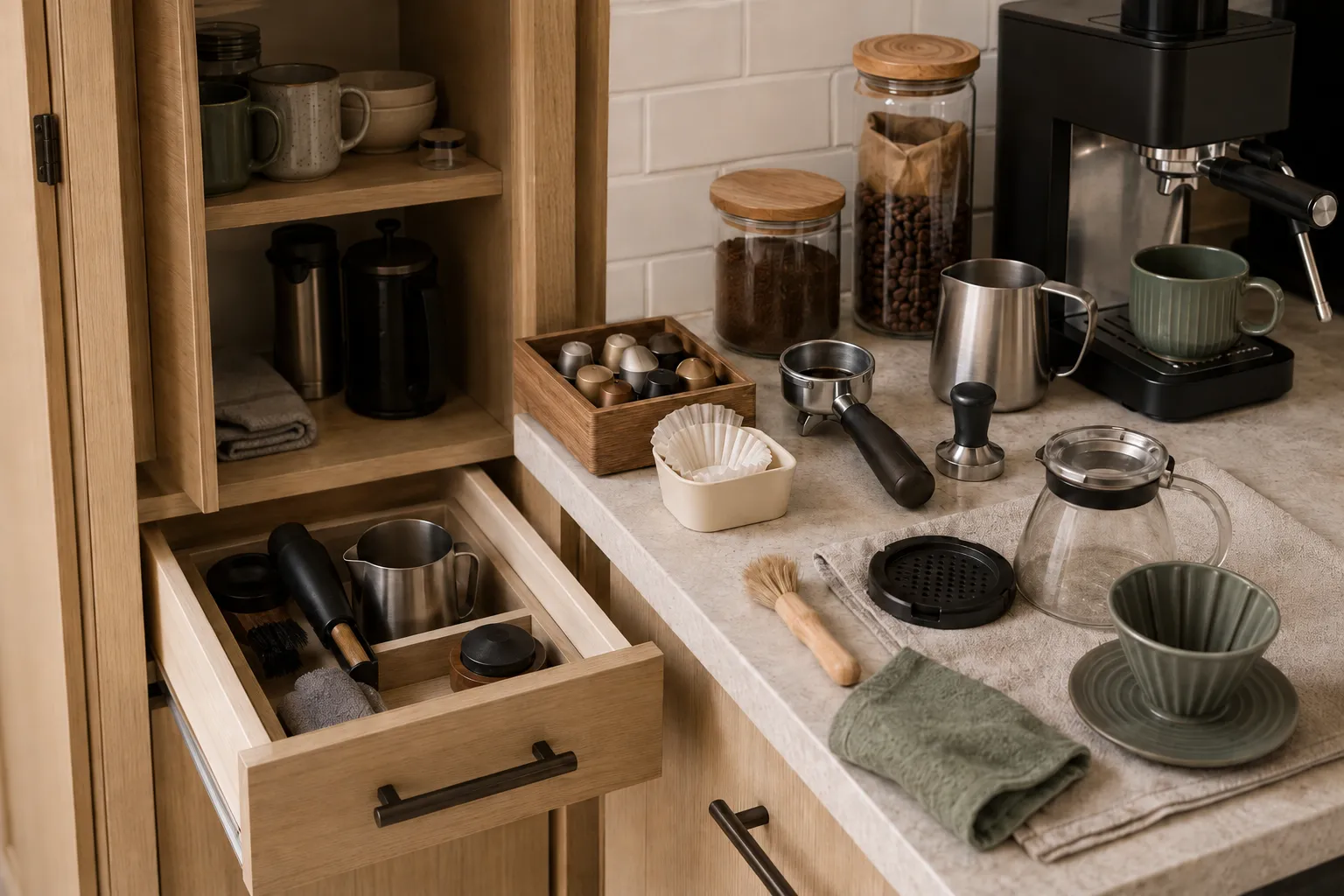
For help deciding whether a separate grinder earns counter space, see compact coffee grinders for small apartments. For a first-apartment kitchen more broadly, see which small appliances to buy first.
FAQ
What is the best coffee maker for a very small counter?
For a permanently plugged-in machine, the Keurig K-Mini has the narrowest listed width in this comparison at 4.5 in. If the counter must remain clear, the AeroPress Go is the smaller overall storage solution because it packs into its mug after use.
Is a five-cup coffee maker large enough for an apartment?
It can be a better fit than a full-size brewer when one or two people want several mugs without keeping a twelve-cup machine on the counter. Check the manufacturer’s cup definition and the carafe volume before assuming five cups means five large mugs.
Should I buy an espresso machine just because it is compact?
No. An espresso machine makes sense when espresso and milk drinks are part of your normal routine. It still needs coffee suitable for espresso, portafilter room, a milk workflow, and often a grinder. A compact drip or manual system is simpler for regular brewed coffee.
Can one all-in-one machine save apartment counter space?
Sometimes. A machine such as the Ninja ES601 can replace several coffee devices, but it is not physically small. It saves space only when you would otherwise keep a separate grinder, espresso machine, and drip brewer on the counter.